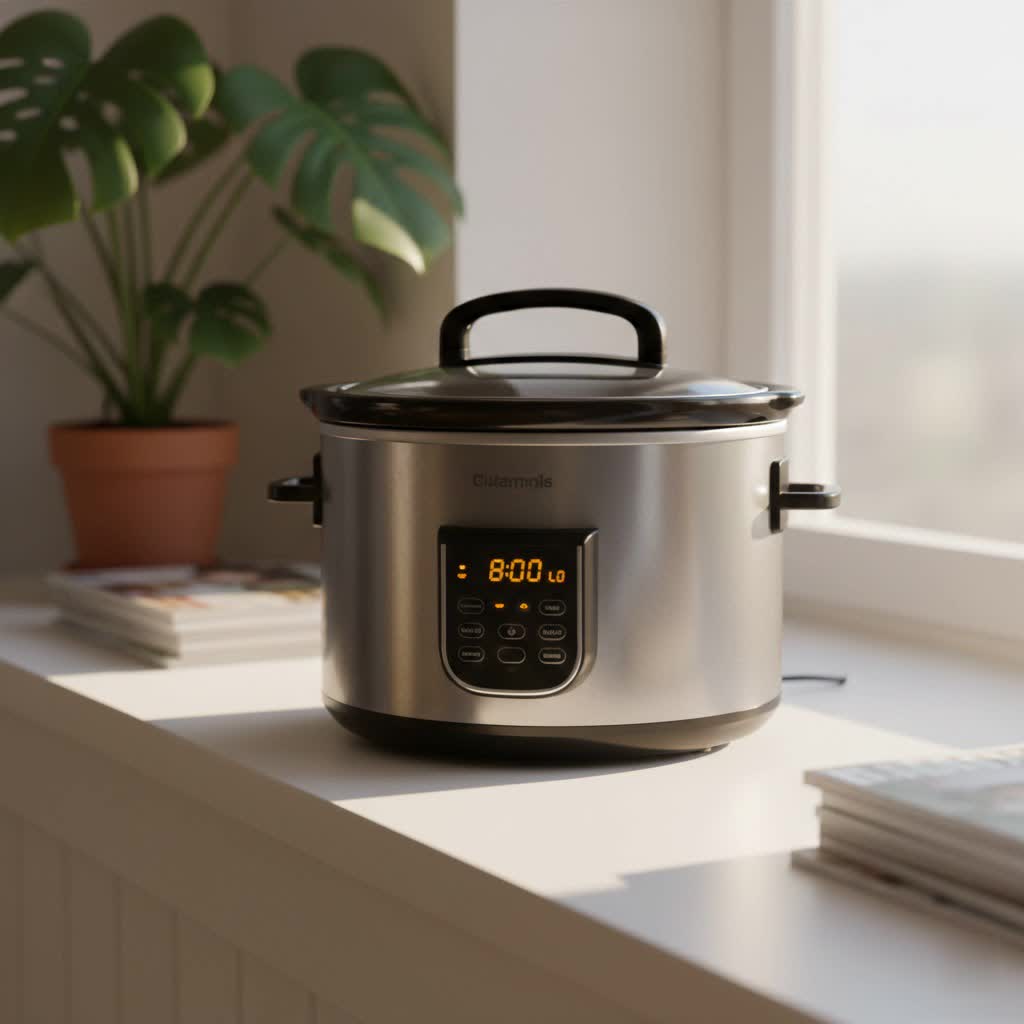
In today’s fast-paced world, the quest for convenient, delicious, and nutritious homemade meals often leads us to consider modern kitchen appliances. Among the most popular contenders are the slow cooker and the pressure cooker, each promising to simplify your cooking experience. But which one truly fits your lifestyle, and what are the fundamental differences that set them apart? Understanding their unique mechanisms, advantages, and disadvantages is key to making an informed choice that will revolutionize your culinary routine.
What is a Slow Cooker?
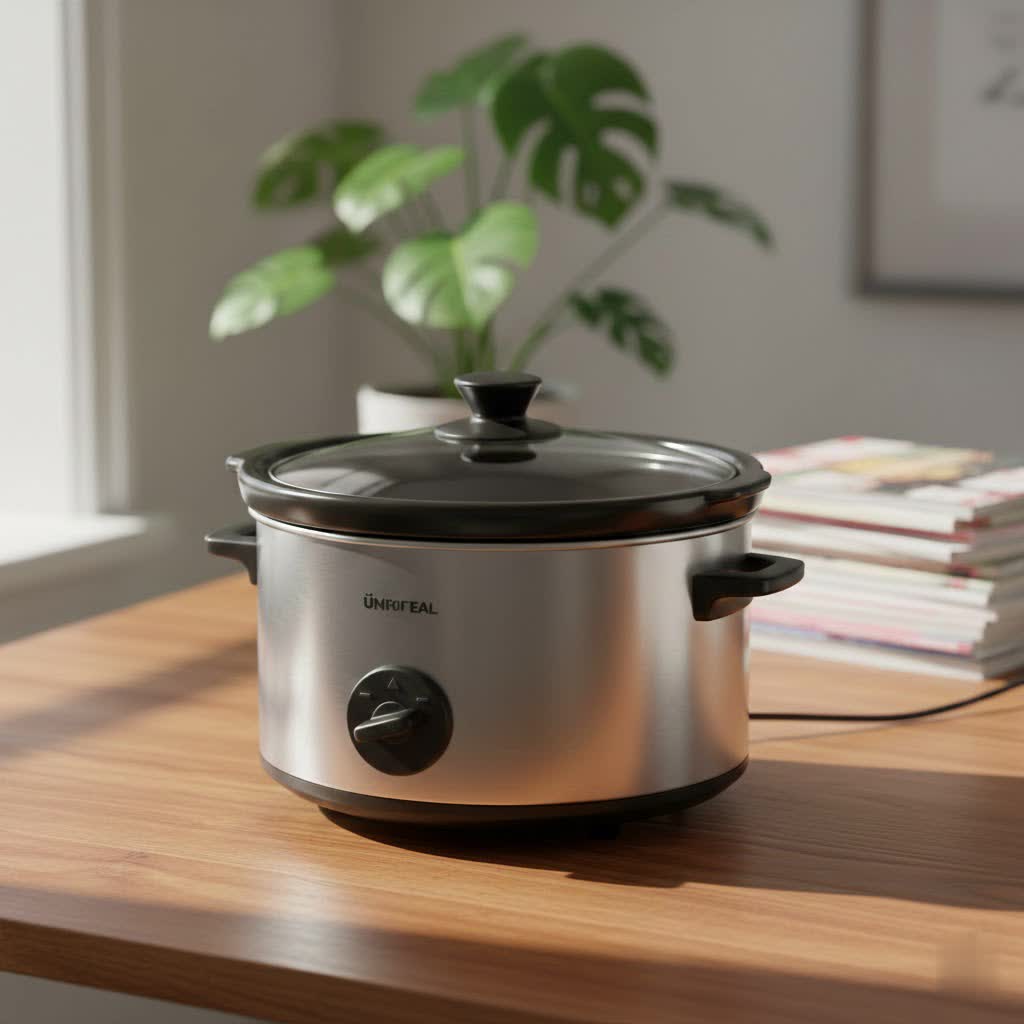
A slow cooker is an electric countertop appliance designed to simmer food at a low temperature over an extended period. This method of cooking, often referred to as “set-it-and-forget-it,” allows ingredients to gently cook for several hours, typically while you’re away or busy with other tasks. Its roots trace back to the 1940s when the Naxon Beanery was developed, gaining popularity as more women entered the workforce and sought convenient ways to prepare meals.
The core components of a slow cooker include a sturdy outer casing with a built-in heating element, a removable insert pot (often made of stoneware or ceramic), and a tightly fitting lid, usually glass. Heat is transferred indirectly from the base and sides to the insert, warming the food consistently between approximately 170°F and 280°F (77°C and 138°C). The lid plays a crucial role by trapping steam and moisture, which helps to tenderize food and distribute flavors evenly. Slow cookers typically feature basic settings like “Low” (cooking for 6-8 hours), “High” (cooking for 3-4 hours), and “Keep Warm” (maintaining a safe serving temperature). More advanced programmable models offer countdown timers, delayed start options, and automatic warming, providing even greater convenience for busy home chefs.
What is a Pressure Cooker?
In stark contrast to the slow cooker’s gentle approach, a pressure cooker is engineered to dramatically accelerate the cooking process by harnessing the power of steam heating under high pressure. These appliances feature an airtight lid that seals the pot, preventing steam from escaping. As liquid inside boils, the trapped steam rapidly builds pressure, which in turn raises the boiling point of water well beyond its normal 212°F (100°C) to temperatures between 212°F and 250°F (100°C and 121°C).
This elevated temperature and pressure allow food to cook significantly faster than conventional methods. Modern pressure cookers come in two main types: stovetop models, which are placed on a burner, and electric pressure cookers (often multi-cookers), which are standalone countertop units with built-in heating elements and advanced safety features. Both types include a steam release valve to regulate pressure and safely depressurize the pot after cooking. While stovetop models may require manual steam release, electric versions often feature automatic, hands-free release mechanisms, enhancing user safety and convenience.
Pros and Cons: Slow Cooker vs. Pressure Cooker
Deciding between a slow cooker and a pressure cooker often comes down to understanding their distinct advantages and disadvantages, and how these align with your cooking style and needs.
Slow Cooker Advantages
|
Our Picks for the Best Slow Cooker in 2026
We may earn a commission when you use one of our links to make a purchase.
|
||
| Num | Product | Action |
|---|---|---|
| 1 | 3.2L Natural Unglazed Earthenware Casserole,Yixing Zisha Clay Pot for Cooking, Healthy Slow Cooker for Soup, Stew, Rice -Zini,Purple |

|
| 2 | Crock-Pot 6 Quart Programmable Slow Cooker with Timer and Auto Food Warmer Setting, Stainless Steel |
|
| 3 | Crock-Pot 6 Quart Cook & Carry Programmable Slow Cooker with Digital Timer Stainless Steel (CPSCVC60LL-S) pack of 1 |
|
| 4 | Ninja MC1101 Foodi Everyday Possible Cooker Pro, 8-in-1 Versatility, One-Pot Faster Cooking Replaces 10 Tools, Family-Sized Capacity with Adjustable Temp Control, 6.5 quarts, Midnight Blue |
|
| 5 | Crock-Pot 7 Quart Oval Manual Slow Cooker, Stainless Steel (SCV700-S-BR), Versatile Cookware for Large Families or Entertaining |
|
| 6 | 8-Quart Digital Programmable Slow Cooker with Timer - Small Kitchen Appliance for Family Dinners - Serves 10+ People - Heat Settings: Keep Warm, Low and High |
|
| 7 | Ninja® 12-in-1 PossibleCooker™ PLUS - 8.5-qt - Sous Vide & Proof Multi-Cooker - Slow Cooker, Dutch Oven & More - Glass Lid & Integrated Spoon - Nonstick - Oven Safe Pot to 500°F - Black - MC1010 |
|
| 8 | Crock-Pot Large 8-Quart Programmable Slow Cooker with Auto Warm Setting Black Stainless Steel |
|
| 9 | Ninja MC1001 Foodi PossibleCooker PRO 8.5 Quart Multi-Cooker, with 8-in-1 Slow Cooker, Dutch Oven, Steamer, Glass Lid Integrated Spoon, Nonstick, Oven Safe Pot to 500°F, Sea Salt Gray |
|
| 10 | 3.2L Natural Unglazed Earthenware Casserole,Yixing Zisha Clay Pot for Cooking, Healthy Slow Cooker for Soup, Stew, Rice -Zhuni,Red |
|
Slow cookers excel in offering a remarkably hands-off cooking experience, making them a favorite for those with demanding schedules. You can simply add your ingredients in the morning and return to a fully cooked meal in the evening, ready to be served. This long, gentle cooking process is particularly adept at tenderizing tough and less expensive cuts of meat, transforming them into succulent dishes.
> “The beauty of slow cooking lies in its ability to extract and meld flavors over time, creating a depth that rapid cooking often misses.” – Admin, Reviewerty.com
The low-temperature environment helps to preserve many nutrients that might be lost in higher-heat cooking methods. Furthermore, slow cooking in liquid can reduce the formation of advanced glycation end products (AGEs) and other potentially harmful compounds often associated with high-heat cooking like grilling. Slow cookers are also energy-efficient, using less power than a conventional oven, and they won’t heat up your kitchen, making them ideal for year-round use. Their versatility allows for a wide array of recipes, from hearty stews and soups to tender roasts, chilis, and even desserts.
Slow Cooker Disadvantages
While incredibly convenient, slow cookers do have their limitations. The most obvious drawback is the extended cooking time, which requires significant planning and isn’t suitable for last-minute meal preparations. Some critics argue that slow-cooked food can sometimes lack the deep, caramelized flavors achieved through browning, as the low temperature doesn’t facilitate the Maillard reaction. This can lead to a somewhat “blander” taste in certain dishes, often requiring pre-browning of ingredients in a separate pan. There’s also a risk of overcooking delicate ingredients, resulting in a mushy texture if the recipe isn’t carefully followed. Additionally, the appliance’s size can be a concern for kitchens with limited counter or storage space.
Pressure Cooker Advantages
The primary benefit of a pressure cooker is its incredible speed. It can cook meals 3 to 10 times faster than traditional methods, often cutting cooking times by 30% to 70%. This makes it an invaluable tool for preparing quick weeknight dinners or when you need to get food on the table in a fraction of the time. The rapid cooking at higher temperatures also helps to lock in nutrients, as vitamins and minerals have less time to degrade or leach into the cooking liquid.
Pressure cooking intensifies flavors by trapping steam and aromatics within the sealed pot, resulting in deeply flavorful and vibrant dishes. It’s excellent for tenderizing tough cuts of meat and quickly cooking ingredients like dried beans, grains, and root vegetables without the need for prior soaking. Like slow cookers, modern electric pressure cookers are energy-efficient, as their sealed environment requires less energy to maintain high temperatures, and they don’t significantly heat up your kitchen. Many contemporary electric pressure cookers are multi-functional, offering additional settings like sautéing, steaming, and even slow cooking, providing remarkable versatility in a single appliance.
Pressure Cooker Disadvantages
Despite their speed, pressure cookers come with a steeper learning curve than slow cookers. Users need to understand different pressure settings, natural vs. quick release methods, and safe operation procedures. Historically, pressure cookers carried a reputation for being dangerous, though modern appliances are equipped with multiple safety features to prevent accidents. Delicate foods can easily become overcooked and mushy if timing isn’t precise due to the high-pressure environment. The sealed nature of the pot means you cannot taste or adjust seasonings during the cooking process, requiring careful recipe adherence. Furthermore, while many electric models include a sauté function, stovetop pressure cookers don’t facilitate browning, which might require an additional step if you desire deep, savory crusts. The initial cost of a quality pressure cooker, especially a multi-cooker, can also be higher than a basic slow cooker.
Slow Cooker vs. Pressure Cooker: A Detailed Comparison
To truly grasp the distinctions and decide which appliance best suits your kitchen, let’s examine a side-by-side comparison.
| Feature | Slow Cooker | Pressure Cooker |
|---|---|---|
| Cooking Method | Low, gentle, moist heat over long periods. | High temperature, high pressure steam. |
| Cooking Time | Long (4-8+ hours). | Fast (minutes to 1-2 hours). |
| Temperature | 170°F – 280°F (77°C – 138°C). | 212°F – 250°F (100°C – 121°C). |
| Best For | Tough meats, stews, soups, pot roasts, chilis, meal prep, unattended cooking. | Dried beans, grains, tough meats, quick weeknight meals, sterilization. |
| Flavor Profile | Deep, developed, melded flavors; can be milder without pre-browning. | Intense, vibrant flavors; can be less complex than slow-cooked. |
| Nutrient Retention | Good due to low heat; can reduce harmful compounds. | Excellent due to shorter cooking times. |
| Energy Use | Low wattage, uses less energy than an oven. | Energy efficient due to faster cooking. |
| Safety | Generally very safe, minimal risk. | Modern units very safe, but requires careful operation. |
| Convenience | “Set-it-and-forget-it,” minimal supervision. | Quick results, hands-off once pressurized. |
| Cost | Generally more affordable for basic models. | Can be more expensive, especially multi-cookers. |
Choosing Your Ideal Cooking Companion
Selecting between a slow cooker and a pressure cooker, or even investing in a multi-cooker that does both, depends entirely on your lifestyle, culinary habits, and priorities.
Determine Your Needs
First, consider your daily routine. Do you prefer to prep meals in the morning and have them ready when you get home, or do you need to whip up dinner quickly after a long day? A slow cooker is ideal for the former, perfect for weekend meal prep or when you’re out of the house for extended periods. A pressure cooker, conversely, is a godsend for spontaneous cooking or when you’re short on time. Also, think about the types of dishes you prepare most often and your family size. Larger capacities (5+ liters) are great for families or batch cooking, available in both types. Set a realistic budget, as prices can vary significantly depending on features and brand.
Consider Features
When evaluating models, look beyond the basic function. A “Keep Warm” setting is almost standard and highly beneficial. A “Delay Start” function on a programmable slow cooker can be a game-changer, allowing you to control precisely when cooking begins. For pressure cookers, consider multi-cookers that offer sauté/sear functions; these can brown ingredients directly in the pot, adding depth of flavor and reducing cleanup. Safety features like automatic pressure release and locking lids are paramount for pressure cookers.
Material & Shape
Slow cookers typically feature stoneware or ceramic inserts, which provide even heat distribution and are often dishwasher-safe for easy cleaning. Oval shapes are particularly good for larger cuts of meat like roasts. Pressure cookers are commonly made with stainless steel for durability, while some may feature aluminum for better heat conductivity.
Brand Reputation
Research brands known for their reliability, performance, and safety. Companies like Instant Pot (known for its multi-cooker functions), Crock-Pot (a slow cooker pioneer), Breville, Cuisinart, and Ninja consistently receive high ratings for their kitchen appliances. Reading user reviews can offer valuable insights into real-world performance and durability.
Top Considerations for Each Appliance
If maximum convenience and tender, fall-off-the-bone results are your goal with minimal effort and supervision, a slow cooker is an excellent choice. It excels at comforting stews, rich curries, and perfectly cooked meats, allowing flavors to deepen over hours.
If speed is your ultimate priority, enabling you to prepare nutritious meals in a fraction of the time, a pressure cooker is unmatched. It’s perfect for quickly cooking dried beans, grains, or tough cuts of meat, ensuring dinner is ready even on the busiest weeknights. Many modern kitchens benefit from the versatility of an electric multi-cooker, which combines both slow cooking and pressure cooking functions, offering the best of both worlds in a single appliance.
Using and Maintaining Your Cooker
Proper use and maintenance are crucial for the longevity and safety of both appliances. Always consult your instruction manual for specific guidelines. For slow cookers, ensure there’s always enough liquid to prevent burning, and avoid overfilling. The ceramic insert and lid are typically dishwasher-safe, making cleanup straightforward. For pressure cookers, it’s vital to ensure the sealing ring is properly seated and the steam release valve is clear before operation. Never attempt to open a pressure cooker until all pressure has been safely released. Regular cleaning of the sealing ring and valves is essential to maintain performance and safety.
Conclusion
Both the slow cooker and the pressure cooker offer distinct advantages, transforming how we approach home cooking by providing either leisurely convenience or remarkable speed. The slow cooker is a master of patient, flavor-developing cooking, ideal for busy individuals who plan ahead and cherish tender, comforting meals. The pressure cooker, on the other hand, is a champion of efficiency, delivering quick, nutrient-rich dishes with intense flavors, perfect for last-minute culinary feats. Your ultimate choice hinges on your specific needs: whether you prioritize time, flavor depth, or a blend of both. Understanding these nuances will empower you to select the kitchen companion that truly enhances your cooking journey. Which appliance will become your kitchen’s new best friend?
Câu Hỏi Thường Gặp
Is a slow cooker healthier than a pressure cooker?
Both slow cookers and pressure cookers can contribute to healthy eating. Slow cooking, with its low temperatures, helps preserve some heat-sensitive nutrients and can reduce the formation of certain compounds found in high-heat cooking. Pressure cooking, by significantly reducing cooking time, also minimizes nutrient loss that can occur over extended cooking periods, with studies showing high vitamin retention.
Can I convert slow cooker recipes to a pressure cooker?
Yes, many slow cooker recipes can be adapted for a pressure cooker, but adjustments are necessary. Pressure cookers cook significantly faster (often 4-8 times quicker), so cooking times will need to be drastically reduced. Additionally, pressure cooking involves minimal liquid evaporation, so you’ll typically need to reduce the amount of liquid specified in a slow cooker recipe by about a quarter.
What foods are best for a slow cooker versus a pressure cooker?
Slow cookers excel with tough cuts of meat like chuck roasts and pork shoulder, as well as stews, soups, and chilis, allowing flavors to meld over time. Pressure cookers are ideal for quickly cooking dried beans, grains like rice and quinoa, root vegetables, and larger cuts of meat when you’re short on time, producing tender results in minutes.
Do slow cookers and pressure cookers save energy?
Both appliances are generally more energy-efficient than a conventional oven for cooking similar dishes. Slow cookers use low wattage over many hours, while pressure cookers use higher heat but for much shorter durations, making them energy savers by reducing overall cooking time. Modern electric models also generate less ambient heat in the kitchen compared to an oven.
Are modern pressure cookers safe?
Yes, modern pressure cookers are designed with multiple safety features, including locking lids, redundant pressure release valves, and automatic shut-off mechanisms. These advancements have significantly mitigated the safety concerns associated with older models, making them very safe to use when operated according to the manufacturer’s instructions.