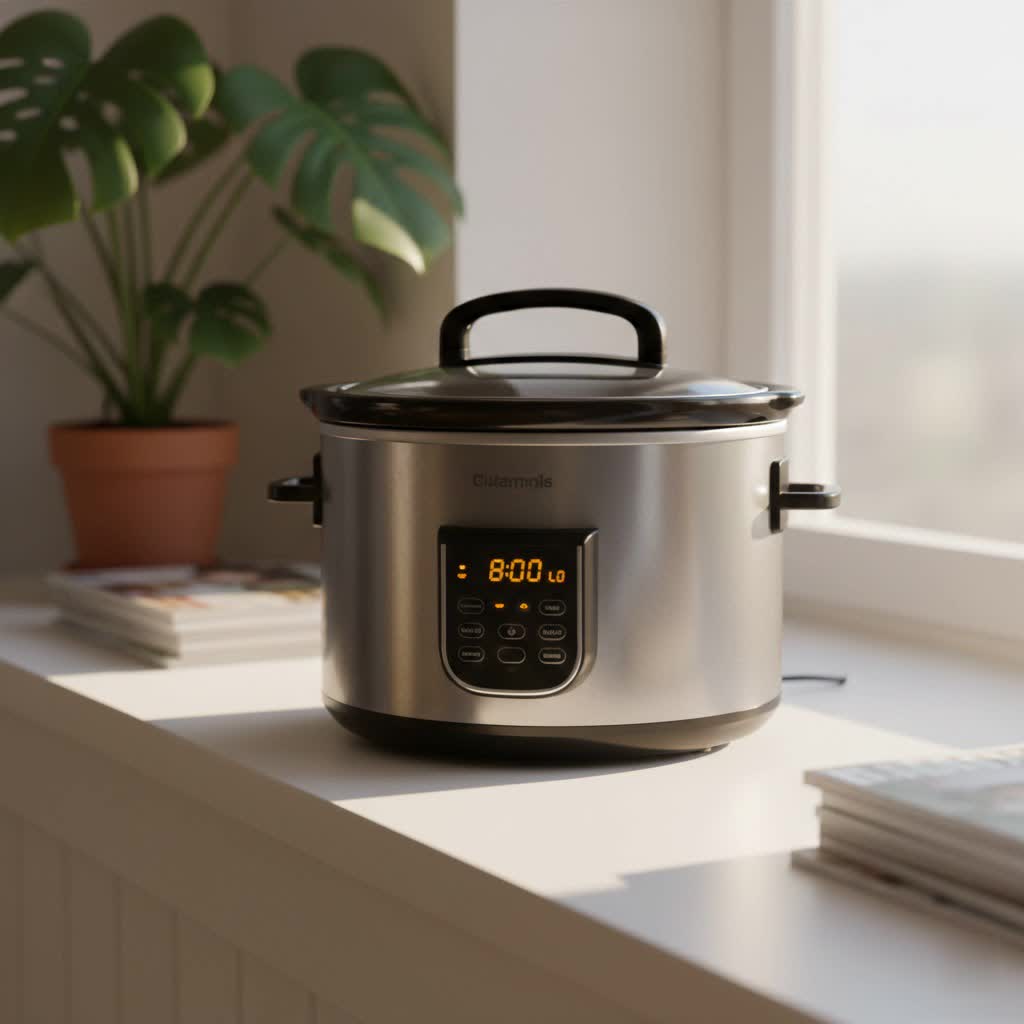
The Hamilton Beach slow cooker has become a beloved kitchen staple, simplifying meal preparation for countless homes. At the heart of this convenience lies a seemingly small but crucial component: the control knob. Whether it’s a traditional rotary dial or part of a more advanced digital interface, this knob is your gateway to perfectly cooked, tender meals. But what happens when this vital part malfunctions, or you simply need to understand its nuances better? This comprehensive guide delves into everything you need to know about your Hamilton Beach slow cooker knob, from its fundamental functions and various types to troubleshooting common issues and finding the right replacement. We’ll ensure you continue to unlock the full potential of your slow cooker, one turn or press at a time.
What is a Slow Cooker and How Does Its Knob Work?
A slow cooker, often referred to as a Crock-Pot (a popular brand that became synonymous with the appliance), is an electric cooking appliance that simmers food at a low temperature for many hours. This gentle, consistent heat cooks food thoroughly, tenderizing tough cuts of meat and blending flavors beautifully. The core principle involves a heating element in the base that warms an inner pot, typically made of ceramic or stoneware, which then slowly transfers heat to the food.
The control knob plays a pivotal role in this process, acting as the user interface to manage the cooking cycle. Historically, slow cooker knobs were purely mechanical, directly connecting to a switch that activated different heating coils. Modern slow cookers, especially Hamilton Beach models, often feature electronic controls where the knob might interact with a digital sensor to precisely regulate temperature and time. Regardless of the underlying technology, the knob dictates the heat setting—be it Low, High, or Warm—and sometimes even controls programmable timers. It’s the primary way you communicate your culinary intentions to the appliance, making it an indispensable component for successful slow cooking.
Advantages and Disadvantages of Slow Cookers
Slow cookers offer a compelling set of benefits that have cemented their place in kitchens worldwide, largely facilitated by their straightforward control knobs.
Advantages
- Time and Effort Saving: One of the most significant advantages is the ability to “set it and forget it.” With a simple turn of the knob to your desired setting, you can leave food to cook while you attend to other tasks, returning to a ready meal.
- Flavor and Nutrition Preservation: The low and slow cooking method allows flavors to meld deeply, resulting in richer, more aromatic dishes. It also helps to retain moisture and nutrients that might be lost with faster, high-heat cooking.
- Versatile Meal Preparation: From hearty stews and tender roasts to comforting soups and even desserts, the slow cooker’s knob provides the flexibility to prepare a vast array of recipes suitable for various settings.
- Safety and Ease of Use: Operating a slow cooker is generally very safe and intuitive. The control knob makes it easy to select settings, even for novice cooks, and the appliance typically requires minimal supervision during operation.
|
Our Picks for the Best Slow Cooker in 2026
We may earn a commission when you use one of our links to make a purchase.
|
||
| Num | Product | Action |
|---|---|---|
| 1 | Ninja® 12-in-1 PossibleCooker™ PLUS - 8.5-qt - Sous Vide & Proof Multi-Cooker - Slow Cooker, Dutch Oven & More - Glass Lid & Integrated Spoon - Nonstick - Oven Safe Pot to 500°F - Black - MC1010 |

|
| 2 | Crock-Pot Large 8-Quart Programmable Slow Cooker with Auto Warm Setting Black Stainless Steel |
|
| 3 | Ninja MC1101 Foodi Everyday Possible Cooker Pro, 8-in-1 Versatility, One-Pot Faster Cooking Replaces 10 Tools, Family-Sized Capacity with Adjustable Temp Control, 6.5 quarts, Midnight Blue |
|
| 4 | Crock-Pot 6 Quart Cook & Carry Programmable Slow Cooker with Digital Timer Stainless Steel (CPSCVC60LL-S) pack of 1 |
|
| 5 | 3.2L Natural Unglazed Earthenware Casserole,Yixing Zisha Clay Pot for Cooking, Healthy Slow Cooker for Soup, Stew, Rice -Zini,Purple |
|
| 6 | 8-Quart Digital Programmable Slow Cooker with Timer - Small Kitchen Appliance for Family Dinners - Serves 10+ People - Heat Settings: Keep Warm, Low and High |
|
| 7 | Crock-Pot 6 Quart Programmable Slow Cooker with Timer and Auto Food Warmer Setting, Stainless Steel |
|
| 8 | 3.2L Natural Unglazed Earthenware Casserole,Yixing Zisha Clay Pot for Cooking, Healthy Slow Cooker for Soup, Stew, Rice -Zhuni,Red |
|
| 9 | Crock-Pot 7 Quart Oval Manual Slow Cooker, Stainless Steel (SCV700-S-BR), Versatile Cookware for Large Families or Entertaining |
|
| 10 | Ninja MC1001 Foodi PossibleCooker PRO 8.5 Quart Multi-Cooker, with 8-in-1 Slow Cooker, Dutch Oven, Steamer, Glass Lid Integrated Spoon, Nonstick, Oven Safe Pot to 500°F, Sea Salt Gray |
|
Disadvantages
- Long Cooking Times: The very nature of “slow” cooking means meals can take several hours, sometimes up to 8-10 hours, which requires planning. This duration is directly controlled by the knob settings you select.
- Less Precise Temperature Control: While digital models with knobs offer more accuracy, traditional mechanical knobs often have broad temperature ranges for Low and High settings, making ultra-precise temperature adjustments challenging for specific culinary needs.
- Risk of Overcooking: If left for too long or if the wrong setting is chosen, some delicate foods can become mushy or overly tender. Understanding what each knob setting does is crucial to prevent this.
- Size and Storage: Slow cookers can be bulky, taking up significant counter or cabinet space, which is not directly related to the knob but is a general consideration for the appliance.
Types of Slow Cookers and Their Knobs
Hamilton Beach offers a diverse range of slow cookers, and their control knobs vary based on the model and its technological features. Understanding these types helps in selecting the right appliance and managing it effectively.
Classification by Control Mechanism
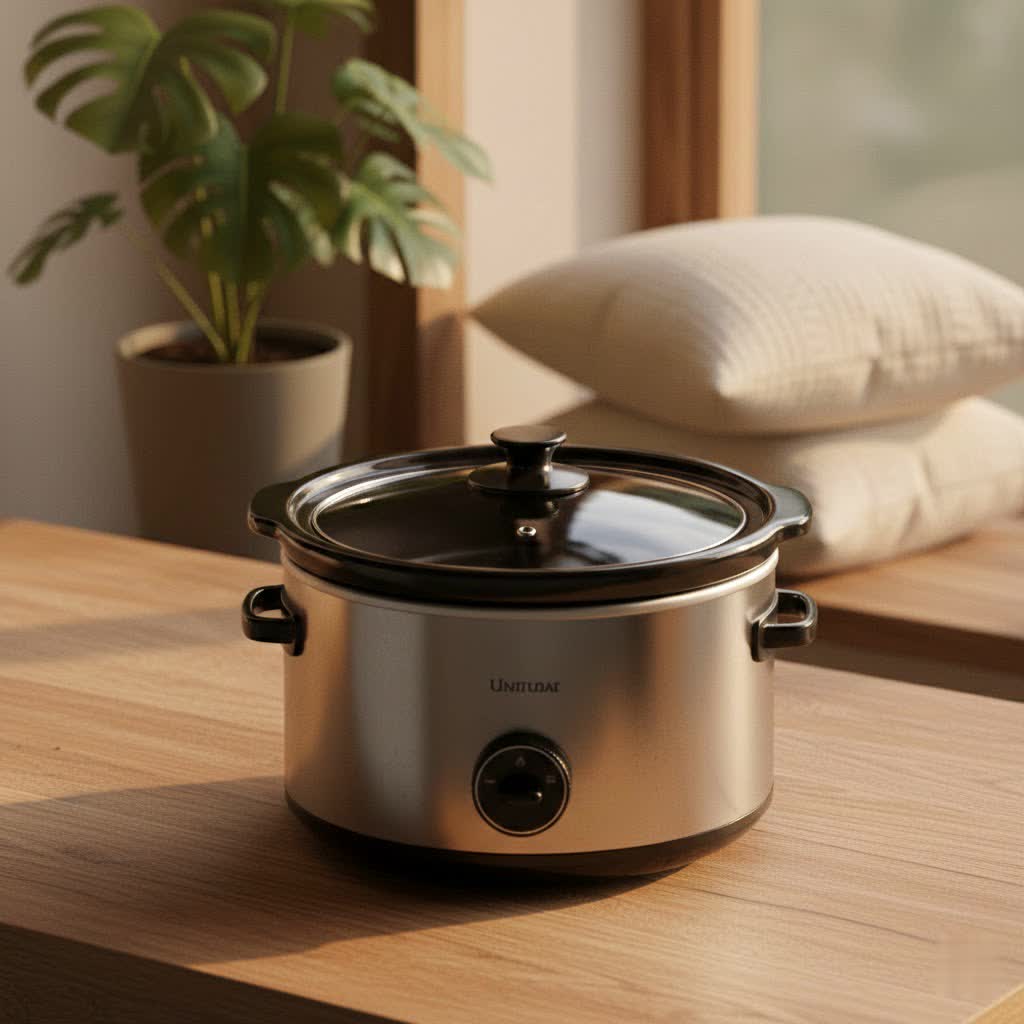
- Mechanical Knobs: These are the most traditional type of slow cooker controls. A simple rotary dial, the mechanical knob, typically has settings like
OFF,LOW,HIGH, and sometimesWARM. You physically turn the knob to click into the desired setting. These are known for their durability and straightforward operation, making them a favorite for those who prefer no-frills cooking. - Electronic/Digital Control Panels with Rotary Knobs: Many modern Hamilton Beach slow cookers feature a digital interface. Here, a rotary knob might be used to navigate menus, adjust cooking time, or set a target temperature, often in conjunction with a digital display and push buttons. These systems offer more advanced features such as programmable timers, delay start options, and sometimes temperature probes for precise internal food temperature monitoring. The knob provides a tactile way to interact with the digital settings, offering a blend of traditional feel with modern functionality.
While slow cookers can also be classified by shape (round, oval) or material (ceramic, stoneware), the type of control knob is primarily determined by the internal electronics and user interface design.
Understanding Your Hamilton Beach Slow Cooker Knob Settings
Mastering your Hamilton Beach slow cooker begins with a clear understanding of what each knob setting signifies and how it impacts your cooking. Most models will feature a variation of the following core settings:
- OFF: This setting turns the slow cooker off and is crucial for safety and preventing overcooking. Always ensure the knob is turned to
OFFwhen cooking is complete or when the appliance is not in use. - LOW: The
LOWsetting cooks food at a gentler, lower temperature for an extended period. This is ideal for most recipes, especially larger cuts of meat, stews, and dishes that benefit from slow, even heat. Cooking onLOWtypically takes approximately twice as long as cooking onHIGH(e.g., 8 hours onLOWcompared to 4 hours onHIGH). - HIGH: The
HIGHsetting cooks food at a higher temperature, significantly reducing cooking time. While it cooks faster, it’s generally best suited for dishes with shorter cooking durations or when you need to speed up the process. However, be cautious as it can lead to overcooked or dried-out food if used improperly for long periods. For best results, many recipes suggest checking doneness earlier when usingHIGH. - WARM: The
WARMsetting is designed only to keep thoroughly cooked food at a safe serving temperature. It is critical to understand that theWARMsetting should never be used to cook raw food. UsingWARMfor cooking can result in undercooked food and poses a food safety risk. Always ensure your food has reached its safe internal temperature onLOWorHIGHbefore switching toWARMif your model transitions automatically to this setting after cooking.
For Hamilton Beach slow cookers with digital controls, the knob might also allow you to:
- Set a Timer: Dial in the exact number of hours or minutes for cooking.
- Delay Start: Program the slow cooker to begin cooking at a later time.
- Adjust Target Temperature: For models with a temperature probe, the knob may help set a precise internal temperature for your food.
Hamilton Beach Slow Cooker Knob Replacement Guide
A broken, worn, or missing control knob can render your Hamilton Beach slow cooker unusable, but replacing it is often a simple and cost-effective solution. Don’t let a small part sideline your favorite appliance!
When to Consider a Replacement Knob
You should look into replacing your slow cooker knob if:
- It’s physically broken: Cracked, snapped off, or severely damaged, making it impossible to grip and turn.
- It’s worn out: The markings have faded, making it difficult to identify the settings, or it no longer rotates smoothly.
- It’s missing: Accidentally misplaced or lost during cleaning or storage.
- It’s not engaging: The knob turns, but the internal mechanism isn’t selecting the correct setting, or it feels loose and doesn’t click into place.
How to Find the Right Replacement Part
The most crucial step is to identify your slow cooker’s model number and, if applicable, the series code. These are typically found on a label on the underside or back of the appliance.
- Hamilton Beach Official Website: Start by checking the “Parts & Accessories” section of the Hamilton Beach website. You can often search directly by model number. If you can’t find it, their customer service department is an excellent resource, as they have access to a wide range of parts.
- Authorized Retailers: Websites like eReplacementParts.com specialize in OEM (Original Equipment Manufacturer) and aftermarket parts. Major retailers like Walmart and Amazon also carry specific replacement knobs.
- Check Compatibility: Always verify that the replacement knob is compatible with your specific Hamilton Beach slow cooker model. Descriptions often list compatible model numbers (e.g., “Fits models 33145, 33149, 33167,” etc.).
Installation and Material
Most Hamilton Beach replacement knobs are made from durable, heat-resistant plastic designed to withstand the heat generated by the appliance. Installation is usually straightforward and tool-free: simply align the knob with the control stem and press it firmly into place. This quick fix can restore your slow cooker to full functionality, often for a fraction of the cost of a new appliance.
Using and Maintaining Your Slow Cooker Knob
Proper use and simple maintenance can extend the life of your Hamilton Beach slow cooker knob and ensure consistent performance.
Safe and Effective Operation
- Confirm Settings: Always double-check that your knob is set to the intended cooking temperature (
LOWorHIGH) before leaving the slow cooker unattended. Avoid usingWARMfor cooking raw food. - Gentle Handling: While durable, avoid forcing a stiff knob. If it’s hard to turn, check for any obstructions around the stem.
- Refer to Manuals: If your slow cooker has advanced digital controls, consult your user manual for specific instructions on how to navigate menus and program settings using the knob and associated buttons.
Cleaning and Care
- Unplug Before Cleaning: Always unplug your Hamilton Beach slow cooker from the power outlet before cleaning to prevent electrical shock.
- Wipe Down: Use a damp cloth with mild soap to wipe around the knob and the control panel area. Avoid harsh abrasive cleaners or scouring pads, as these can scratch the surface or remove setting labels.
- Avoid Submersion: Never immerse the entire slow cooker base, especially the control panel and knob area, in water.
- Dry Thoroughly: Ensure the knob and surrounding area are completely dry before plugging the appliance back in for use.
If your knob feels unusually loose or stiff, or if it doesn’t seem to engage the settings properly even after cleaning, it might be a sign that the internal mechanism is failing, and replacement (as discussed above) is usually the best course of action.
Key Features of Hamilton Beach Slow Cooker Control Knobs
Hamilton Beach slow cookers cater to a range of preferences, from basic mechanical operation to advanced digital control. Here’s a look at the types of control knob features you might encounter:
- Basic Rotary Dials: Found on simpler models, these knobs offer fundamental
OFF,LOW,HIGH, andWARMsettings. They are prized for their reliability and ease of use, perfect for those who value simplicity over advanced programming. - Programmable Digital Controls: Many Hamilton Beach slow cookers feature a digital display that works in conjunction with a rotary knob. This knob allows users to easily set specific cooking times, which can range from 30 minutes up to 10 or even 20 hours, depending on the model. After the programmed cooking time, these models often automatically switch to a
WARMsetting to keep your meal ready until you are. - Temperature Probe Integration: Some advanced Hamilton Beach models include a temperature probe. The control knob or associated buttons are then used to set a target internal food temperature, and the slow cooker will automatically switch to
WARMonce that temperature is reached, ensuring perfect doneness without guesswork. - Delay Start Functionality: Found on programmable units, the knob might be used to set a delay for when cooking should begin, offering maximum flexibility for busy schedules.
These varied control knob designs ensure there’s a Hamilton Beach slow cooker to meet every cooking style and preference, empowering you to create delicious meals with precision and ease.
Conclusion
The Hamilton Beach slow cooker knob, whether a simple mechanical dial or an integrated part of a sophisticated digital panel, is the command center for your culinary creations. Understanding its functions, knowing how to properly care for it, and being prepared to replace it if necessary are all key to maximizing the lifespan and performance of your appliance. With the right knob, you unlock the convenience, flavor, and nutritional benefits that slow cooking brings to your family’s table. So, take a moment to appreciate this vital component, master its settings, and continue to enjoy delicious, effortless meals.
What’s your favorite meal to cook with the perfect control from your Hamilton Beach slow cooker knob?
Câu Hỏi Thường Gặp
Can I cook raw food on the WARM setting of my Hamilton Beach slow cooker?
No, the WARM setting on your Hamilton Beach slow cooker is designed exclusively for keeping already cooked food at a safe serving temperature. Cooking raw food on WARM is unsafe as it does not reach high enough temperatures to properly cook food and kill bacteria, potentially leading to foodborne illness. Always use LOW or HIGH for cooking.
How do I find a replacement knob for my Hamilton Beach slow cooker?
To find a replacement knob, locate your slow cooker’s model number, usually on the bottom or back of the appliance. Then, visit the official Hamilton Beach website’s “Parts & Accessories” section or check with authorized retailers like eReplacementParts.com. Always verify compatibility with your specific model number before purchasing to ensure a perfect fit.
What are the typical settings on a Hamilton Beach slow cooker knob?
Most Hamilton Beach slow cooker knobs feature OFF, LOW, HIGH, and WARM settings. LOW cooks gently over a long period, HIGH cooks faster at a higher temperature, and WARM keeps cooked food at serving temperature. Digital models may also include options for setting timers, delay starts, or precise temperature control via the knob.
Why is my Hamilton Beach slow cooker knob loose or difficult to turn?
A loose knob might indicate that it simply needs to be pushed back firmly onto its stem. If it’s difficult to turn, check for food debris or stickiness around the base that might be causing friction. If these simple fixes don’t work, or if the knob spins without engaging the settings, the internal mechanism might be damaged, and a replacement knob is likely needed to restore full functionality.