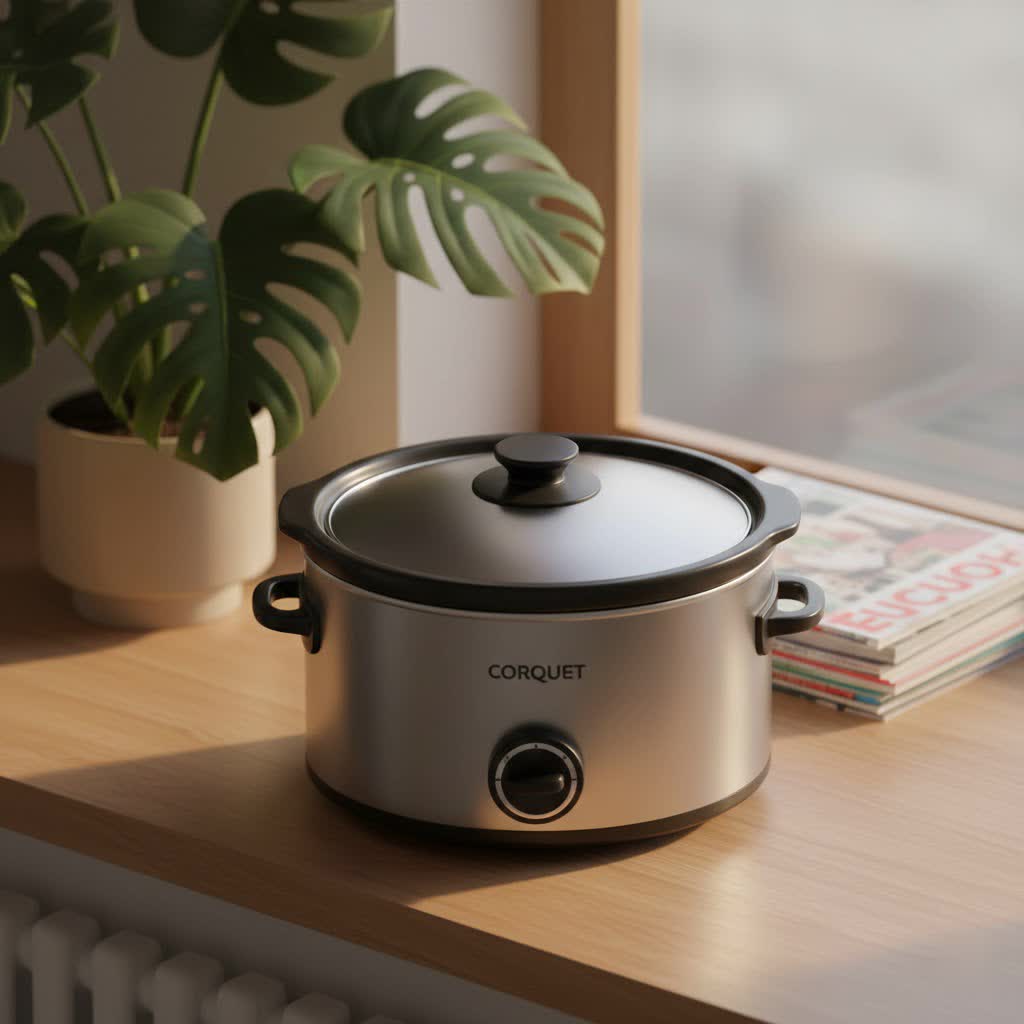
Are you tired of rushing dinner preparations after a long day? Do you dream of coming home to a warm, delicious meal with minimal effort? A slow cooker can improve your cooking routine, turning tough cuts of meat into tender delights and melding flavors to perfection. But with countless models on the market, choosing the right one can feel overwhelming. This guide cuts through the noise to help you discover the best slow cookers of 2022, ensuring you find a reliable kitchen companion that fits your family’s needs and budget.
What is a Slow Cooker?
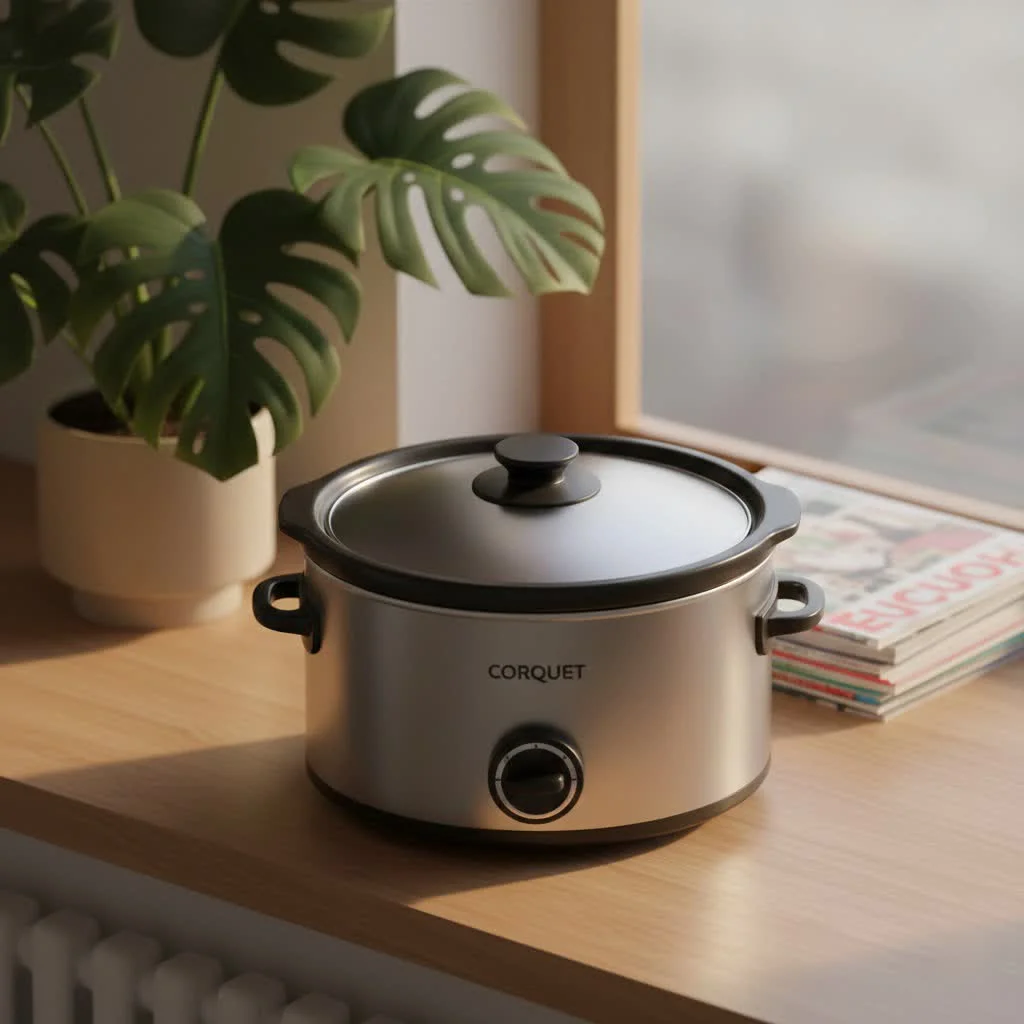
A slow cooker is an electric countertop appliance designed for “set it and forget it” cooking, using low heat over an extended period. This method allows food to simmer gently, tenderizing ingredients and deepening flavors that conventional cooking methods often miss. The magic happens through its simple yet effective design: an outer housing with a heating element, a removable inner cooking vessel (often called a crock or pot), and a lid. For see our slow cooker recommendations on this site.
The principle behind a slow cooker’s operation involves consistent, low-level heat applied evenly around the cooking pot. This gentle heating process breaks down tough fibers in meat and vegetables, making them incredibly tender while retaining moisture. Early models were quite basic, typically offering just “on” and “off” settings, but modern slow cookers have evolved to include advanced features, digital controls, and versatile functions that cater to diverse culinary needs. The main components include the base with heating elements, a ceramic or non-stick metal insert that holds the food, and a tightly fitting lid—usually glass—to trap heat and moisture.
Advantages and Disadvantages of a Slow Cooker
Slow cookers offer a unique blend of convenience and culinary benefits, but they also come with certain limitations. Understanding these can help you decide if it’s the right appliance for your kitchen.
Advantages
- Time and Effort Saving: One of the most significant benefits is the hands-off nature of slow cooking. You can prep ingredients in the morning, set the cooker, and return hours later to a fully cooked meal, eliminating last-minute dinner stress.
- Flavor and Nutrition Retention: The low, slow cooking process locks in moisture and nutrients, preventing food from drying out. This method also allows flavors to meld and intensify over time, resulting in richer, more delicious dishes.
- Versatile Meal Preparation: Slow cookers are incredibly versatile, capable of preparing a wide array of dishes from soups, stews, and chili to roasts, pulled pork, desserts, and even bread.
- Safety and Ease of Use: With simple controls and stable temperatures, slow cookers are generally very safe and easy for anyone to operate, requiring minimal supervision once set.
- Economical Cooking: Slow cooking is excellent for making tougher, less expensive cuts of meat incredibly tender, making your grocery budget go further.
Disadvantages
|
Our Picks for the Best Slow Cooker in 2026
As an Amazon Associate I earn from qualifying purchases.
|
||
| Num | Product | Action |
|---|---|---|
| 1 | Ninja MC1001 Foodi PossibleCooker PRO 8.5 Quart Multi-Cooker, with 8-in-1 Slow Cooker, Dutch Oven, Steamer, Glass Lid Integrated Spoon, Nonstick, Oven Safe Pot to 500°F, Sea Salt Gray |

|
| 2 | 3.2L Natural Unglazed Earthenware Casserole,Yixing Zisha Clay Pot for Cooking, Healthy Slow Cooker for Soup, Stew, Rice -Zini,Purple |
|
| 3 | Ninja® 12-in-1 PossibleCooker™ PLUS - 8.5-qt - Sous Vide & Proof Multi-Cooker - Slow Cooker, Dutch Oven & More - Glass Lid & Integrated Spoon - Nonstick - Oven Safe Pot to 500°F - Black - MC1010 |
|
| 4 | Crock-Pot Large 8-Quart Programmable Slow Cooker with Auto Warm Setting Black Stainless Steel |
|
| 5 | Crock-Pot 6 Quart Cook & Carry Programmable Slow Cooker with Digital Timer Stainless Steel (CPSCVC60LL-S) pack of 1 |
|
| 6 | Crock-Pot 7 Quart Oval Manual Slow Cooker, Stainless Steel (SCV700-S-BR), Versatile Cookware for Large Families or Entertaining |
|
| 7 | 8-Quart Digital Programmable Slow Cooker with Timer - Small Kitchen Appliance for Family Dinners - Serves 10+ People - Heat Settings: Keep Warm, Low and High |
|
| 8 | Crock-Pot 6 Quart Programmable Slow Cooker with Timer and Auto Food Warmer Setting, Stainless Steel |
|
| 9 | Ninja MC1101 Foodi Everyday Possible Cooker Pro, 8-in-1 Versatility, One-Pot Faster Cooking Replaces 10 Tools, Family-Sized Capacity with Adjustable Temp Control, 6.5 quarts, Midnight Blue |
|
| 10 | 3.2L Natural Unglazed Earthenware Casserole,Yixing Zisha Clay Pot for Cooking, Healthy Slow Cooker for Soup, Stew, Rice -Zhuni,Red |
|
- Long Cooking Times: As the name suggests, slow cookers require extended cooking periods, typically several hours. This makes them unsuitable for quick weeknight meals when you need food on the table fast.
- Difficult to Adjust Temperature Precisely: While many models offer “low,” “high,” and “warm” settings, precise temperature control can be challenging, which might be a drawback for very delicate recipes.
- Risk of Overcooking: If left on for too long, especially on a high setting, some dishes can become mushy or overly soft, particularly vegetables and certain cuts of meat.
- Size and Storage: Many slow cookers, particularly larger capacity models, can be bulky and take up significant counter and storage space in smaller kitchens.
- Limited Browning: Traditional slow cookers do not brown or crisp food, meaning you might need an extra pan for searing meats beforehand if you desire that deep, caramelized flavor. Multi-cookers can address this with integrated searing functions.
Popular Types of Slow Cookers
Slow cookers come in various forms, each designed to meet different cooking needs and preferences. Understanding these classifications can help narrow down your choices.
Classification by Shape
- Round Slow Cookers: These are typically smaller in capacity and best suited for soups, stews, chili, and smaller cuts of meat or side dishes. Their compact footprint can be ideal for kitchens with limited space.
- Oval Slow Cookers: Offering a larger capacity, oval slow cookers are perfect for cooking bigger items like whole chickens, roasts, or racks of ribs. Their elongated shape accommodates larger cuts of meat more effectively than round models.
- Square Slow Cookers: Less common, square-shaped slow cookers can offer a good balance between the compactness of round models and the larger capacity for certain recipes.
Classification by Material
- Ceramic/Stoneware Inserts: These are the traditional choice, known for excellent heat retention and even cooking. Ceramic crocks are durable and often aesthetically pleasing, but they can be heavy and prone to cracking if subjected to sudden temperature changes.
- Nonstick Metal Inserts: Lighter and often easier to clean than ceramic, these inserts typically feature an aluminum core with a nonstick coating. Some metal inserts are designed to be stovetop-safe, allowing you to sear ingredients directly in the pot before slow cooking, which minimizes extra dishes.
Classification by Feature
- Manual Slow Cookers: These are the most basic models, usually featuring simple “High,” “Low,” and “Warm” settings controlled by a dial. They are straightforward, reliable, and often the most budget-friendly option.
- Digital/Programmable Slow Cookers: These models offer more control with digital displays and programmable timers. You can often set specific cooking durations, and many automatically switch to a “keep warm” mode once the cooking cycle is complete, preventing overcooking.
- Multi-Cookers with Slow Cook Function: Modern multi-cookers, such as some Instant Pot models, combine several appliances into one, including slow cooking, pressure cooking, sautéing, steaming, and even baking. While highly versatile, their slow cook function may not always be as consistent as a dedicated slow cooker.
Comparing Slow Cooker Types
To help you decide, here’s a comparison of different slow cooker types based on common criteria.
| Feature / Type | Manual Slow Cooker | Digital/Programmable Slow Cooker | Multi-Cooker (with Slow Cook) |
|---|---|---|---|
| Control Type | Simple dial (High/Low/Warm) | Digital display, precise timer | Digital display, multiple presets |
| Ease of Use | Very easy, straightforward | Easy, slight learning curve for programs | Moderate, can be complex with many functions |
| Versatility | Limited to slow cooking/warming | Good for timed slow cooking | High (pressure cook, sauté, steam, etc.) |
| Price Range | Budget-friendly ($-$$) | Mid-range ($$-$$$) | Higher ($$$-$$$$) |
| Pot Material | Ceramic/Stoneware common | Ceramic/Stoneware or nonstick metal | Nonstick metal, stainless steel |
| Typical Capacity | All sizes | All sizes | Often 6-8 quarts |
| Key Advantage | Simplicity, reliability | “Set and forget” convenience | Replaces multiple appliances |
| Key Disadvantage | No timer, less control | Can be more expensive | Slow cook function may vary from dedicated unit, more complex |
How to Choose the Right Slow Cooker (Buying Guide)
Selecting the ideal slow cooker involves considering your household’s unique cooking habits and preferences.
Determine Your Needs
Start by evaluating who you’ll be cooking for and what you typically prepare.
- Family Size: A couple might need a 3-4 quart model, while a family of four to six typically benefits from a 5-6 quart capacity. Larger families or those who frequently entertain may prefer 7-8 quart or larger units.
- Common Dishes: If you mostly make stews and soups, a round pot might suffice. For roasts or whole poultry, an oval shape is more practical.
- Budget: Slow cookers range widely in price. Determine how much you’re willing to invest, balancing features with cost.
Choose the Appropriate Capacity
Capacity is crucial for optimal performance, as slow cookers work best when filled between one-half and three-quarters full.
- Small (under 3 liters/quarts): Ideal for single servings, couples, dips, or side dishes. The Brentwood Slow Cooker, for instance, offers a 1.5-quart capacity perfect for small batches or appetizers.
- Medium (3-5 liters/quarts): Suitable for 2-4 people, offering enough space for family meals without being excessively large.
- Large (over 5 liters/quarts): Best for families of four or more, meal prepping, or entertaining guests, accommodating large cuts of meat or big batches. Many popular models, like the Cuisinart Cook Central or Instant Superior Cooker, are 6-7.5 quarts.
Select Pot Material
The material of the cooking pot influences heat distribution, weight, and cleaning.
- Ceramic/Stoneware: Known for excellent heat retention and durability, ensuring even cooking. However, they are heavier and can be fragile.
- Nonstick Metal (e.g., aluminum with nonstick coating): Lighter, often easier to clean, and some can be used on the stovetop for browning before slow cooking. Models like the GreenLife Cook Duo feature non-toxic ceramic-coated aluminum inserts that are stovetop and oven safe.
Essential Features
Consider which features will genuinely enhance your cooking experience:
- Cooking Modes: Most offer “High” (faster cooking), “Low” (slower cooking, ideal for longer durations), and “Warm” (maintains serving temperature after cooking).
- Programmable Timer: Allows you to set precise cooking times, with many automatically switching to a keep-warm function when done. This is a must-have for busy individuals.
- Keep-Warm Function: Ensures your meal stays at a safe serving temperature for several hours without continuing to cook, perfect for varying dinner times.
- Sauté/Browning Function: Found in multi-cookers or advanced slow cookers, this allows you to sear meats directly in the pot, adding depth of flavor and reducing cleanup.
- Lid Features: A clear glass lid lets you monitor food without losing heat. Locking lids are excellent for safe transportation to potlucks.
Reputable Brands
Many brands consistently produce high-quality slow cookers. Look for established names like Crock-Pot (the original slow cooker brand), Cuisinart, Instant Pot, Hamilton Beach, Ninja, and All-Clad. These brands are often reviewed for reliability, performance, and customer satisfaction.
Top Slow Cookers of 2022 (Detailed Reviews)
While the
Cooking gear we tested in our own kitchens
Free PDF — preheat times measured on 10 popular air fryers.

I finally bit the bullet and got the Crock-Pot 6-Quart Programmable Slow Cooker mentioned. It’s been a game-changer for weeknight dinners! Coming home to a fully cooked meal is such a relief, especially with two busy kids. The programmable timer is super handy, and everything I’ve made so far has been perfectly tender.
I tried the Instant Pot Duo, hoping it would replace my old slow cooker and pressure cooker. While the pressure cooking is fantastic, I found the slow cook function to be a bit inconsistent. It doesn’t seem to get as hot as my dedicated slow cooker, so some recipes take longer than expected. Still, it’s a decent all-in-one for the price range.
I’ve been using my slow cooker for years, mostly for chili and stews. I appreciated the tip about using tougher cuts of meat; I always just stuck to chicken breasts. My old model was pretty basic, but I’m considering upgrading to one of the multi-cooker options for the added versatility. It’s great for meal prep on Sundays.
My family loves pulled pork, and my old slow cooker just wasn’t cutting it anymore. I invested in the Cuisinart 3-in-1 Cook Central, and wow, what a difference! The browning function before slow cooking really adds a lot of flavor. It’s made my life so much easier, and the clean-up is a breeze too.