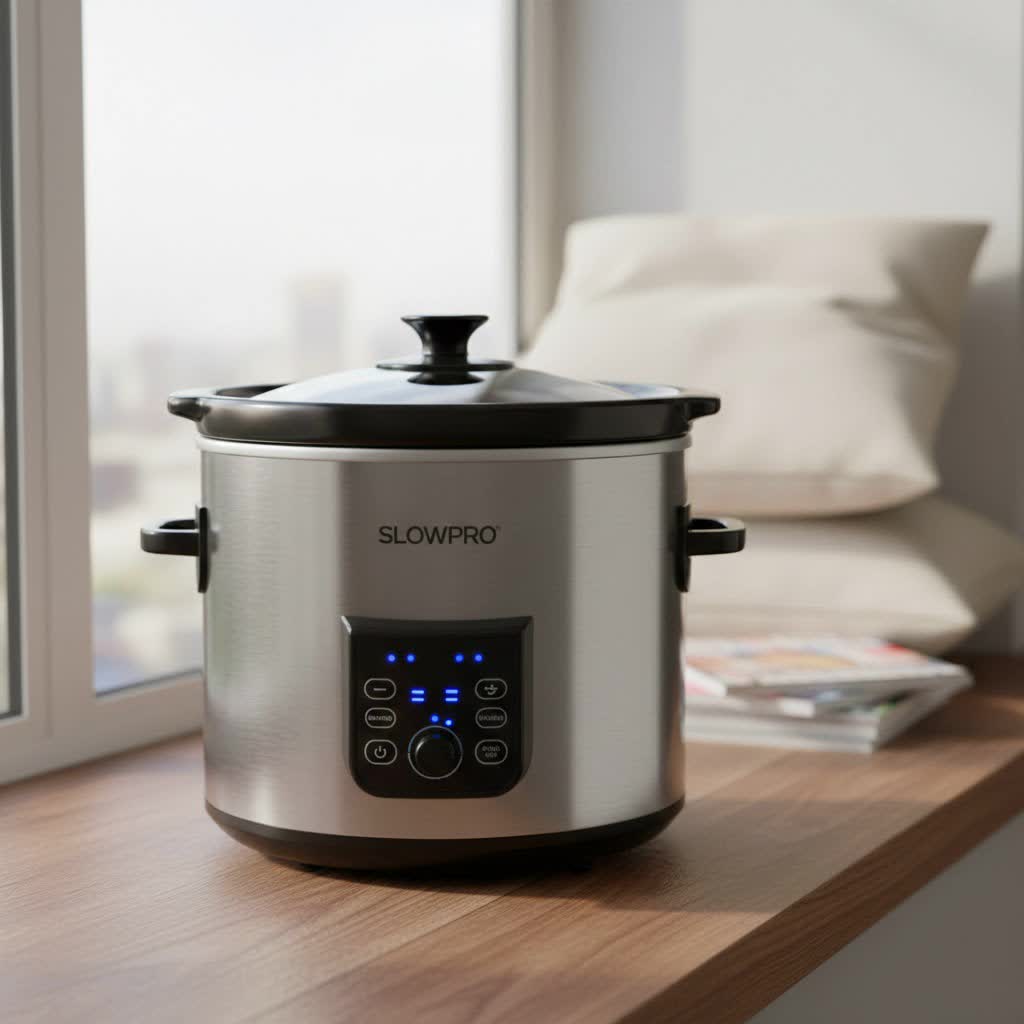
Imagine coming home to a perfectly cooked, warm meal, filling your kitchen with inviting aromas, all with minimal effort. That’s the magic of a slow cooker. But have you ever stopped to consider what makes this kitchen workhorse so efficient? It often comes down to one key factor: wattage. Understanding your slow cooker’s wattage isn’t just about technical specifications; it’s crucial for gauging its cooking performance, energy consumption, and ultimately, how it fits into your home and lifestyle. From simmering stews to tender roasts, the power behind your pot impacts everythingLet’s examine the world of slow cooker wattage to help you make informed choices and maximize your culinary adventures.
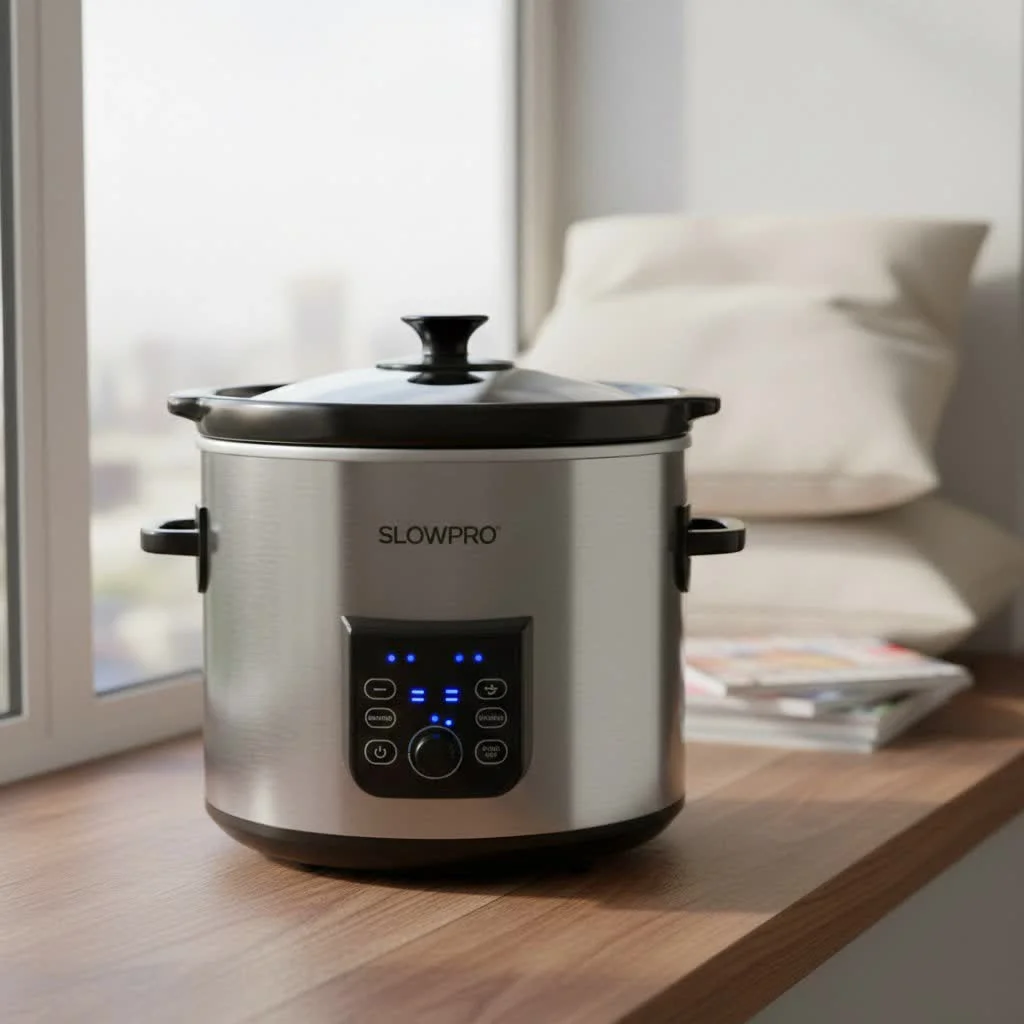
What is a Slow Cooker (Crock Pot)?
A slow cooker, often popularly known by the brand name Crock-Pot, is an electric cooking appliance designed to simmer food at a low temperature for an extended period. Its genius lies in its ability to break down tough cuts of meat and meld flavors beautifully, transforming simple ingredients into rich, complex dishes. The core principle involves gentle, consistent heat distribution, typically allowing for hands-off cooking over several hours. For browse all slow cooker articles on this site.
Historically, slow cookers emerged in the early 20th century, evolving from bean pots designed to cook beans overnight. The modern Crock-Pot gained widespread popularity in the 1970s as a convenient solution for busy families. At its heart, a slow cooker consists of a heating element in the base, an outer casing, and a removable ceramic or stoneware insert with a lid, usually made of glass. The heating element gently warms the insert, which then evenly distributes heat to the food, preventing scorching and locking in moisture and nutrients.
Advantages and Disadvantages of Slow Cookers
Slow cookers have carved out a permanent place in many kitchens due to their distinct benefits and a few limitations.
Advantages
- Time and Effort Saving: One of the most significant benefits is the “set it and forget it” convenience. You can load ingredients in the morning and return to a finished meal.
- Flavor and Nutrition Retention: The low and slow cooking process helps to tenderize tougher cuts of meat and allows flavors to deepen and meld, often enhancing the overall taste. This method also minimizes nutrient loss compared to high-heat cooking.
- Versatility: From hearty stews and soups to pot roasts, chilis, desserts, and even bread, slow cookers can prepare a vast array of dishes.
- Safety and Simplicity: They are generally very safe to operate, featuring stable bases and controlled heating elements. Their straightforward controls make them accessible for all cooking skill levels.
- Energy Efficiency: Despite cooking for long hours, slow cookers are surprisingly energy-efficient, often using less electricity than a conventional oven for the same meal.
Disadvantages
|
Our Picks for the Best Slow Cooker in 2026
As an Amazon Associate I earn from qualifying purchases.
|
||
| Num | Product | Action |
|---|---|---|
| 1 | 3.2L Natural Unglazed Earthenware Casserole,Yixing Zisha Clay Pot for Cooking, Healthy Slow Cooker for Soup, Stew, Rice -Zini,Purple |

|
| 2 | Crock-Pot 6 Quart Cook & Carry Programmable Slow Cooker with Digital Timer Stainless Steel (CPSCVC60LL-S) pack of 1 |
|
| 3 | Ninja MC1101 Foodi Everyday Possible Cooker Pro, 8-in-1 Versatility, One-Pot Faster Cooking Replaces 10 Tools, Family-Sized Capacity with Adjustable Temp Control, 6.5 quarts, Midnight Blue |
|
| 4 | Crock-Pot 6 Quart Programmable Slow Cooker with Timer and Auto Food Warmer Setting, Stainless Steel |
|
| 5 | Ninja® 12-in-1 PossibleCooker™ PLUS - 8.5-qt - Sous Vide & Proof Multi-Cooker - Slow Cooker, Dutch Oven & More - Glass Lid & Integrated Spoon - Nonstick - Oven Safe Pot to 500°F - Black - MC1010 |
|
| 6 | Crock-Pot Large 8-Quart Programmable Slow Cooker with Auto Warm Setting Black Stainless Steel |
|
| 7 | 3.2L Natural Unglazed Earthenware Casserole,Yixing Zisha Clay Pot for Cooking, Healthy Slow Cooker for Soup, Stew, Rice -Zhuni,Red |
|
| 8 | Crock-Pot 7 Quart Oval Manual Slow Cooker, Stainless Steel (SCV700-S-BR), Versatile Cookware for Large Families or Entertaining |
|
| 9 | 8-Quart Digital Programmable Slow Cooker with Timer - Small Kitchen Appliance for Family Dinners - Serves 10+ People - Heat Settings: Keep Warm, Low and High |
|
| 10 | Ninja MC1001 Foodi PossibleCooker PRO 8.5 Quart Multi-Cooker, with 8-in-1 Slow Cooker, Dutch Oven, Steamer, Glass Lid Integrated Spoon, Nonstick, Oven Safe Pot to 500°F, Sea Salt Gray |
|
- Long Cooking Times: The very nature of “slow” cooking means meals take several hours, which requires planning ahead and isn’t suitable for last-minute meals.
- Difficulty in Temperature Adjustment: While many models offer “Low,” “High,” and “Warm” settings, precise temperature control as seen in some modern ovens is usually not an option.
- Risk of Overcooking: If not monitored or if recipes aren’t followed correctly, some ingredients can become mushy or overcooked due to prolonged heat exposure.
- Size and Storage: Many slow cookers, especially larger capacity models, can be bulky and take up significant counter or storage space.
Types of Slow Cookers
Slow cookers come in various designs and functionalities, each catering to different needs and, indirectly, influencing their wattage requirements.
Classification by Shape
- Round: These are traditional and common, often suitable for smaller portions or dishes that fit well into a circular pot.
- Square: Similar to round, but offer a slightly different footprint that some users prefer for certain cuts of meat or dishes.
- Oval: Ideal for larger cuts of meat like roasts or whole chickens, as their elongated shape accommodates bigger ingredients more easily. Larger oval models typically correspond to higher wattage.
Classification by Material
- Stoneware/Ceramic: The most common inserts, known for excellent heat retention and even heat distribution. They are also usually oven-safe.
- Metal (Non-Stick): Some newer models feature metal inserts, often lighter and sometimes stovetop-safe for browning ingredients before slow cooking, which adds to their versatility. While the material of the insert itself doesn’t directly dictate wattage, its heat conductivity and retention can affect how efficiently the heating element works.
Classification by Features
- Manual (Basic): These simply offer Low, High, and Warm settings with a manual dial. They are often the most straightforward and affordable.
- Programmable (Digital): These allow you to set specific cooking times, after which they might automatically switch to a “Warm” setting. The digital controls and sensors might draw a minimal amount of additional wattage compared to manual models, but the main heating element’s wattage remains the primary power consumer.
- Multi-Cookers (Smart): Often combining slow cooking with pressure cooking, searing, steaming, and other functions, these advanced units typically have higher maximum wattages to support diverse cooking methods. Their electronics for smart features and connectivity add a negligible amount to the overall wattage.
Demystifying Slow Cooker Wattage
Wattage is simply the measure of electrical power an appliance consumes to operate. For a slow cooker, wattage directly indicates how much electricity its heating element uses to generate heat.
Why does wattage matter for your slow cooker? Firstly, it impacts cooking performance. A higher wattage generally means the slow cooker can reach its target temperature more quickly and maintain it with greater stability, especially for larger capacities. This can be important for food safety and ensuring consistent cooking results. Secondly, wattage directly relates to energy consumption and your electricity bill. While slow cookers are efficient, understanding their wattage helps you estimate their operational cost over long cooking periods.
Most slow cookers operate within a range of approximately 70 watts on the lowest setting to around 370 watts on the highest setting, depending on size and model.
Factors Influencing Slow Cooker Wattage
Several key characteristics of a slow cooker contribute to its specific wattage rating.
Size and Capacity
The most significant factor affecting a slow cooker’s wattage is its capacity. Larger slow cookers, designed to cook bigger meals for more people, naturally require more power to heat a greater volume of food and maintain a consistent temperature throughout.
- Smaller Models (1.5-4 quarts): These compact units typically consume between 70 to 150 watts. They’re perfect for dips, small side dishes, or meals for one or two people.
- Standard Models (4-7 quarts): The most common “family size” slow cookers fall into the 100 to 210-watt range. They handle everyday stews, roasts, and casseroles with ease.
- Larger Models (6-8+ quarts): Designed for entertaining or batch cooking, these larger appliances can draw anywhere from 200 to 370 watts, reflecting their need to heat and sustain higher temperatures across a larger cooking surface.
Temperature Settings
Slow cookers typically offer “Low,” “High,” and “Warm” settings, each corresponding to a different wattage draw.
- Low Setting: Generally uses between 70 to 150 watts. This setting heats food slowly and steadily, often taking 6-8 hours to fully cook dishes.
- High Setting: Demands more power, usually ranging from 150 to 300 watts. Food cooks faster on High, typically in 3-4 hours, by reaching a higher temperature more quickly than on Low. Some larger models may peak higher.
- Warm Setting: This setting uses the least amount of power, usually between 50 to 100 watts, and is designed to keep food at a safe serving temperature after it’s cooked, not to cook it further.
Design and Insulation
While not directly listed as a wattage factor, the overall design and insulation of a slow cooker can indirectly impact its operational wattage. A well-insulated slow cooker will retain heat more effectively, meaning the heating element might cycle on less frequently or for shorter durations to maintain the desired temperature. This contributes to better energy efficiency over the entire cooking cycle, even if the peak wattage remains the same. Better insulation effectively means the cooker gets more “mileage” out of its given wattage.
Typical Slow Cooker Wattage Ranges
To give you a clearer picture, here’s a general breakdown of slow cooker wattage based on size and setting:
| Capacity (Quarts) | Low Setting (Watts) | High Setting (Watts) | Warm Setting (Watts) | Notes |
|---|---|---|---|---|
| 1.5 – 2 | 70 – 120 | 120 – 170 | 40 – 70 | Ideal for dips, small portions, single servings |
| 3 – 4.5 | 120 – 170 | 170 – 210 | 50 – 80 | Popular for 2-4 person households |
| 5 – 6 | 150 – 200 | 200 – 270 | 60 – 90 | Standard family size, most common recipes |
| 7 – 8+ | 180 – 250 | 250 – 370 | 70 – 100 | Best for large families, entertaining |
Note: These ranges are approximate and can vary by brand, model, and specific design.
How to Determine Your Slow Cooker’s Wattage
Knowing your slow cooker’s exact wattage is simple and can be helpful for energy monitoring or planning for portable power sources.
- Check the Rating Label: The most reliable place to find your slow cooker’s wattage is on the rating label, usually located on the bottom or back of the appliance. Look for “W” for watts, or sometimes “VA” for volt-amps, which is roughly equivalent to watts for most household appliances.
- Consult the User Manual: If the label isn’t clear or is worn off, your slow cooker’s instruction manual or product specifications will list the wattage.
- Calculate from Volts and Amps: If only volts (V) and amps (A) are provided on the label, you can calculate the wattage using the formula: Watts = Volts x Amps. For instance, if your slow cooker lists 120V and 1.5A, its wattage would be 120 x 1.5 = 180 watts.
Slow Cooker Energy Consumption and Cost
Many people wonder if leaving an appliance on for hours consumes a lot of electricity. The good news is that slow cookers are remarkably energy-efficient, particularly when compared to other kitchen appliances.
A typical oven, for example, can draw anywhere from 2,000 to 5,000 watts, while a microwave uses 600 to 1,500 watts. In contrast, a slow cooker’s peak wattage is much lower, generally between 70 to 370 watts. Even though it runs for a longer duration, its low power draw means the total energy consumed (measured in kilowatt-hours, or kWh) is often less than cooking the same meal in a conventional oven. For instance, an oven might use 2-2.2 kWh for a meal, while a slow cooker might use around 0.7 kWh.
To calculate your slow cooker’s electricity cost:
- Find the wattage: (e.g., 200 watts).
- Convert to kilowatts (kW): Divide by 1,000 (200 W / 1000 = 0.2 kW).
- Multiply by hours of use: (e.g., 8 hours). Total kWh = 0.2 kW * 8 hours = 1.6 kWh.
- Multiply by your electricity rate: (e.g., $0.15 per kWh). Cost = 1.6 kWh * $0.15/kWh = $0.24.
Tips for energy-efficient slow cooking:
- Keep the Lid On: Every time you lift the lid, heat escapes, and the slow cooker has to use more energy to regain the lost temperature.
- Fill Appropriately: Filling your slow cooker to at least half, but not more than two-thirds full, ensures efficient cooking. Overfilling or underfilling can lead to uneven cooking or wasted energy.
- Use the Right Size: Match the slow cooker’s capacity to the quantity of food you’re cooking to avoid heating unnecessary empty space.
- Preheat if Needed: Some recipes benefit from preheating the slow cooker, but it’s not always necessary and adds to the initial energy draw.
Choosing the Right Slow Cooker Wattage for Your Kitchen
Selecting a slow cooker involves more than just picking an appealing design; considering its wattage can significantly impact your cooking experience and energy bills.
Assess Your Cooking Needs
Before looking at wattage, think about how you’ll use the appliance.
- Family Size: For a single person or a couple, a 1.5 to 3-quart slow cooker with lower wattage (70-120W) is usually sufficient. A family of four to six typically benefits from a 4- to 6-quart model (100-270W). For larger families or entertaining, 7- to 8-quart models (180-370W) are more appropriate.
- Common Recipes: If you primarily make small dips or sauces, a low-wattage mini slow cooker is perfect. For substantial stews, roasts, or whole chickens, a higher wattage model will offer the necessary power to cook thoroughly and safely.
Select Appropriate Capacity
Once you’ve assessed your needs, choose a capacity that aligns. The capacity will naturally guide you towards a suitable wattage range, as larger pots inherently require more power. Opting for a slow cooker that is too large for your typical use means you’re heating an unnecessarily large volume, potentially wasting energy. Conversely, an undersized pot might struggle to cook larger meals effectively, increasing cooking times and potentially affecting food quality.
Prioritize Essential Features
While wattage is primarily about the heating element, other features contribute to a slow cooker’s overall performance.
- Programmable Settings: Digital controls that allow you to set specific cook times and then automatically switch to a “Warm” setting are incredibly convenient. While the electronics themselves consume minimal wattage, this automation prevents overcooking and ensures your meal is ready when you are.
- Keep Warm Function: This is a standard feature that, as discussed, uses very low wattage to maintain food temperature after cooking. Ensure any model you consider has this to prevent food from cooling down before serving.
- Material and Construction: Look for durable stoneware inserts and sturdy outer casings for better heat retention and longevity. Good insulation can help a slow cooker with moderate wattage perform more efficiently.
Reputable Brands and Wattage Consistency
When making a purchase, consider brands known for reliable performance and accurate specifications. Established manufacturers typically provide consistent wattage that aligns with their stated settings and capacity, ensuring you get the expected cooking results and energy efficiency. While specific product recommendations are outside this scope, general research into user reviews and expert assessments of a brand’s overall quality can guide your decision. A well-built slow cooker, regardless of its exact wattage, will typically provide more consistent heat and a better cooking experience.
Maximizing Performance: Using and Maintaining Your Slow Cooker
To get the most out of your slow cooker, understanding proper usage and maintenance goes hand-in-hand with knowing its wattage.
- Safe Filling Levels: Always fill your slow cooker at least half full, but no more than two-thirds full. Underfilling can lead to overcooking and drying out food quickly, as the smaller amount of food will reach temperature faster than anticipated for the chosen setting. Overfilling can prevent proper cooking and cause spillage.
- Liquid Content: Slow cooking requires less liquid than stovetop cooking because evaporation is minimal with the lid on. Excessive liquid can lead to watery results.
- Avoid Lifting the Lid: Resist the temptation to peek! Each time you lift the lid, you release accumulated heat, adding 15-20 minutes to the cooking time as the appliance works to recover temperature.
- Proper Cleaning and Care: After each use, allow the stoneware insert to cool completely before cleaning to prevent thermal shock, which can cause cracking. Hand wash the stoneware and lid with warm, soapy water, or if dishwasher-safe, place them in the dishwasher. The exterior of the heating unit can be wiped down with a damp cloth. Never immerse the base in water.
- Troubleshooting Common Issues: If your slow cooker seems to be cooking too fast, it might be running hot, or you might be using a high-wattage model for a small amount of food. If it cooks too slowly, ensure it’s on the correct setting, is properly filled, and the lid is sealed. Consistent wattage output is key to reliable cooking, so if you notice significant deviations, consult your manual or consider if your unit needs replacement.
Conclusion
Understanding slow cooker wattage is more than just technical trivia; it’s a fundamental aspect of maximizing your appliance’s performance and managing your household energy consumption. From knowing how different sizes and settings influence power draw to appreciating the surprising energy efficiency of these culinary devices, a grasp of wattage empowers you to make smarter choices. This knowledge can help you select the perfect slow cooker for your needs, ensure optimal cooking results, and even save a few dollars on your electricity bill. So, the next time you savor a delicious, slow-cooked meal, you’ll know exactly what power made it possible.
What’s your go-to slow cooker dish, and how has understanding its wattage improved your cooking?
Frequently Asked Questions
Is a slow cooker energy efficient?
Yes, slow cookers are generally considered very energy-efficient kitchen appliances. They use a relatively low wattage (typically 70-370 watts) over a long period, often consuming less total electricity (kWh) than a conventional oven, which draws significantly more power at a higher rate. This makes them a cost-effective way to cook.
How many watts does a standard 6-quart Crock-Pot use?
A standard 6-quart Crock-Pot typically uses around 180 to 270 watts on average. The exact wattage can vary based on the specific model and the temperature setting chosen, with “Low” consuming less power than “High.”
How do I find the wattage of my slow cooker?
You can find your slow cooker’s wattage primarily by checking the rating label located on the bottom or back of the appliance. Alternatively, consult the user manual that came with your slow cooker. If only volts and amps are listed, you can multiply them (Watts = Volts x Amps) to calculate the wattage.
Does the “High” setting use significantly more electricity than “Low”?
Yes, the “High” setting on a slow cooker generally uses more wattage than the “Low” setting. “High” typically draws between 150 to 300 watts to reach temperature faster, while “Low” uses 70 to 150 watts for a more gradual and extended cooking process.
Can I run a slow cooker on a portable power station or for camping?
Yes, many slow cookers can be run on portable power stations, especially smaller models on the “Low” or “Warm” settings. It’s crucial to check your slow cooker’s wattage and ensure your portable power station has sufficient output capacity (watts) and battery capacity (watt-hours) to power it for the desired cooking duration.
Cooking gear we tested in our own kitchens
Free PDF — preheat times measured on 10 popular air fryers.

Coming home to a warm meal is truly the best! I’ve always loved my slow cooker for its convenience, especially for those busy weeknights. Understanding the wattage has given me a better appreciation for how these appliances work and why some are better suited for certain dishes. Great breakdown of the technical side without being too overwhelming.
This was super informative! I’ve been using a slow cooker for years, mostly for things like pulled pork and chili, but I never really thought about the wattage. Now I understand why my friend’s cheaper model takes forever to cook anything. I’m definitely going to check the specs more closely next time I’m in the market for a new one.
I always wondered why some recipes cooked faster than others in my old slow cooker. This guide on wattage really cleared things up for me! I just upgraded to a model with a higher wattage, and my beef stew now comes out perfectly tender in about 6 hours instead of 8. It’s made a huge difference in my meal prep.
I appreciate the info on energy consumption, but I still find it hard to tell exactly how much my specific Crock-Pot is costing me. My older model seems to run a bit hot even on low, and I’m not sure if that means it’s less efficient or just needs to be replaced. It would be helpful to have a more direct way to calculate the cost.