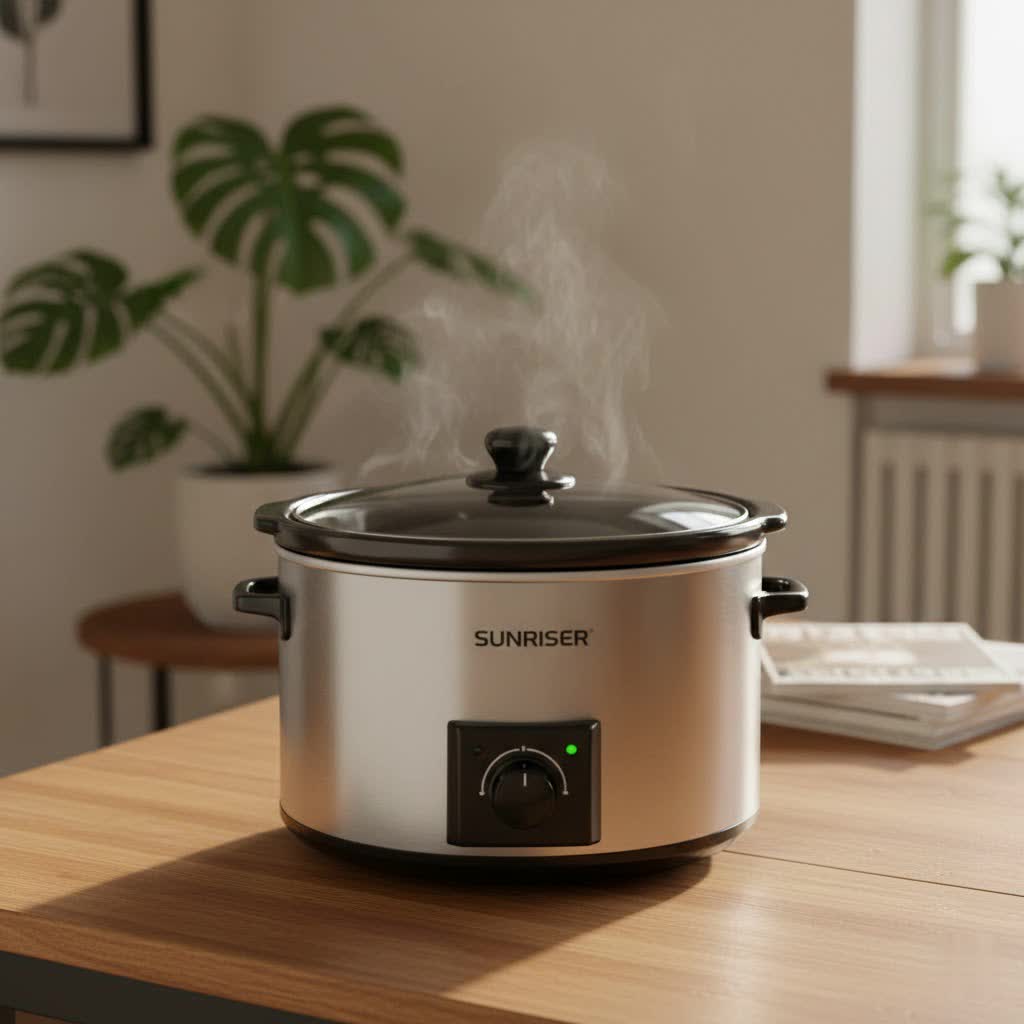
Cooking can often feel like a juggling act, especially when balancing a busy schedule with the desire for wholesome, home-cooked meals. Have you ever wished for an appliance that could handle the heavy lifting of meal preparation, allowing you to return home to the comforting aroma of a ready-to-eat dinner? Enter the slow cooker, often affectionately called an “easy cooker” for its unparalleled ability to simplify your culinary life. This comprehensive guide will delve into everything you need to know about slow cookers, from their fundamental operation to choosing the perfect model and maintaining it for years of delicious, effortless cooking.
What is a Slow Cooker and How Does It Work?
A slow cooker is a countertop electrical cooking appliance designed to simmer food at a lower temperature than traditional cooking methods such as baking, boiling, or frying. This distinct approach facilitates unattended cooking for many hours, making it ideal for dishes that benefit from extended, gentle heat. It’s truly a “set-it-and-forget-it” marvel for modern kitchens.
The fundamental principle behind a slow cooker’s operation is simple yet effective. It typically consists of a lidded cooking pot, often made of glazed ceramic or porcelain (known as a “crock”), which sits within a housing containing an electric heating element. This element surrounds the crock, providing consistent, low heat evenly from the sides and bottom. The tight-fitting lid, often glass, traps moisture and heat, creating a steamy environment that tenderizes food and locks in flavors and nutrients. Unlike a pressure cooker, a slow cooker operates at atmospheric pressure, ensuring safety and a gradual cooking process.
Slow cookers gained popularity in the latter half of the 20th century as a convenient solution for busy families, allowing them to prepare meals in the morning and have them ready by evening. The core components include the outer heating unit, the removable cooking pot, and the lid. The heating element gently warms the inner pot, bringing ingredients to a low simmer (typically between 175°F and 205°F) and maintaining that temperature over several hours.
Advantages and Disadvantages of Slow Cookers
While revered for its convenience, the slow cooker, like any appliance, comes with its own set of benefits and drawbacks. Understanding these can help you maximize its potential in your kitchen.
Advantages
- Time and Effort Saving: The primary draw of a slow cooker is its ability to cook meals unattended for hours. You can simply add your ingredients in the morning and return home to a fully cooked dinner, eliminating the need for constant monitoring [search 3].
- Preserves Flavor and Nutrition: The long, slow cooking process helps to break down tough cuts of meat, making them incredibly tender and flavorful. The sealed environment also retains moisture and nutrients that might be lost with other cooking methods [search 4].
- Versatility in Dishes: Slow cookers are incredibly versatile. They excel at preparing a wide array of dishes, including hearty stews, chili, soups, roasts, pulled pork, casseroles, and even desserts like puddings and dips [search 3, 4].
- Economical Cooking: This appliance makes it possible to use cheaper, tougher cuts of meat, transforming them into succulent meals. It also encourages batch cooking, allowing you to prepare large quantities for leftovers or freezing, which can lead to significant cost savings on groceries and reduce reliance on takeout [search 4].
- Safety and Ease of Use: With just a few settings (usually “Low,” “High,” and “Warm”), slow cookers are straightforward to operate. They are designed for safe, extended use without supervision, provided proper food safety guidelines are followed.
- Keeps Food Warm: Many models feature an automatic “keep warm” setting, which is incredibly handy for families with staggered dinner times or for entertaining [search 3].
Disadvantages
|
Our Picks for the Best Slow Cooker in 2026
As an Amazon Associate I earn from qualifying purchases.
|
||
| Num | Product | Action |
|---|---|---|
| 1 | 8-Quart Digital Programmable Slow Cooker with Timer - Small Kitchen Appliance for Family Dinners - Serves 10+ People - Heat Settings: Keep Warm, Low and High |

|
| 2 | Crock-Pot 7 Quart Oval Manual Slow Cooker, Stainless Steel (SCV700-S-BR), Versatile Cookware for Large Families or Entertaining |
|
| 3 | Crock-Pot 6 Quart Programmable Slow Cooker with Timer and Auto Food Warmer Setting, Stainless Steel |
|
| 4 | Ninja MC1001 Foodi PossibleCooker PRO 8.5 Quart Multi-Cooker, with 8-in-1 Slow Cooker, Dutch Oven, Steamer, Glass Lid Integrated Spoon, Nonstick, Oven Safe Pot to 500°F, Sea Salt Gray |
|
| 5 | Crock-Pot Large 8-Quart Programmable Slow Cooker with Auto Warm Setting Black Stainless Steel |
|
| 6 | 3.2L Natural Unglazed Earthenware Casserole,Yixing Zisha Clay Pot for Cooking, Healthy Slow Cooker for Soup, Stew, Rice -Zini,Purple |
|
| 7 | Ninja MC1101 Foodi Everyday Possible Cooker Pro, 8-in-1 Versatility, One-Pot Faster Cooking Replaces 10 Tools, Family-Sized Capacity with Adjustable Temp Control, 6.5 quarts, Midnight Blue |
|
| 8 | 3.2L Natural Unglazed Earthenware Casserole,Yixing Zisha Clay Pot for Cooking, Healthy Slow Cooker for Soup, Stew, Rice -Zhuni,Red |
|
| 9 | Ninja® 12-in-1 PossibleCooker™ PLUS - 8.5-qt - Sous Vide & Proof Multi-Cooker - Slow Cooker, Dutch Oven & More - Glass Lid & Integrated Spoon - Nonstick - Oven Safe Pot to 500°F - Black - MC1010 |
|
| 10 | Crock-Pot 6 Quart Cook & Carry Programmable Slow Cooker with Digital Timer Stainless Steel (CPSCVC60LL-S) pack of 1 |
|
- Long Cooking Time: As the name suggests, slow cookers take a considerable amount of time to cook. This requires planning and isn’t suitable for spontaneous meals [search 2].
- Difficulty in Precise Temperature Adjustment: Most basic slow cookers offer limited temperature control (typically just “Low” and “High” settings), which can make it challenging to achieve very specific cooking results. More advanced models, however, offer greater precision.
- Risk of Overcooking/Mushy Texture: Delicate ingredients like certain vegetables or lean meats can become overly soft, mushy, or even dry and stringy if left to cook for too long or without enough liquid [search 1, 2, 5]. Some beans, if not pre-cooked, may not reach temperatures high enough to destroy natural toxins [search 1].
- Size and Storage: Slow cookers can be bulky, taking up valuable counter or cabinet space, particularly larger models [search 5].
- Lack of Browning: Traditional slow cookers do not brown food, which can be a disadvantage for dishes that benefit from a seared exterior. Some multi-cookers, however, integrate a sauté function to address this.
Popular Types of Slow Cookers
Slow cookers come in various designs and with different features, catering to diverse cooking needs and preferences. Understanding these categories can help you choose the ideal appliance.
Classification by Shape
The shape of a slow cooker often influences its utility and the types of dishes best suited for it.
- Round Slow Cookers: These are typically smaller in capacity and best suited for soups, stews, smaller roasts, and side dishes. Their compact footprint makes them ideal for kitchens with limited counter space [search 4].
- Oval Slow Cookers: The most common shape, oval slow cookers are highly versatile and excellent for accommodating larger cuts of meat, such as whole chickens, roasts, or racks of ribs. They generally offer more capacity and are favored by families [search 1, 4].
- Rectangular Slow Cookers: Less common, rectangular models can be efficient for certain dishes like lasagna or larger casseroles and may utilize cabinet space more effectively for storage [search 4].
Classification by Material
The material of the inner cooking pot significantly impacts performance and durability.
- Ceramic (Stoneware) Slow Cookers: Ceramic pots are excellent at retaining and distributing heat evenly, which is crucial for consistent slow cooking. They are typically heavier, take longer to heat up, but prevent hot spots and are often dishwasher-safe for easy cleanup [search 1].
- Metal (Aluminum or Steel) Slow Cookers: Lighter than ceramic, metal inserts—often aluminum or stainless steel—heat up more quickly and can sometimes be used on the stovetop to brown ingredients before slow cooking. Many come with non-stick coatings, which aid in cleaning but require care to avoid scratches [search 1].
Classification by Features
Modern slow cookers offer a range of functionalities beyond basic low and high settings.
- Manual Slow Cookers: These are the most basic models, typically featuring “Low,” “High,” and sometimes a “Warm” setting. They require you to manually turn them off, but are generally the most affordable and reliable.
- Programmable/Digital Slow Cookers: These models offer more control with digital timers that allow you to set specific cooking durations. Once the cooking time is complete, many automatically switch to a “keep warm” setting, providing greater flexibility and convenience for busy schedules [search 1].
- Multi-Cookers (with Slow Cooker Function): Appliances like Instant Pots are multi-functional, combining pressure cooking, sautéing, steaming, and often a slow cooking feature. While versatile, their slow cook function may not always match the performance of a dedicated slow cooker [search 3].
- Specialized Features: Some models include features like temperature probes for precise cooking, lid locks for portability, delayed start timers, or even built-in sear/sauté functions to brown ingredients directly in the pot [search 1, 2, 5].
Experience-Driven Slow Cooker Buying Guide
Choosing the right slow cooker involves considering your specific cooking habits, household size, and desired features. Here’s an expert-backed guide to help you make an informed decision.
Determine Your Usage Needs
Before diving into models, reflect on how you plan to use your slow cooker.
- Household Size: How many people will you typically be cooking for? This is the primary factor in determining capacity.
- Frequency of Use: Will it be a daily workhorse or reserved for occasional large gatherings?
- Types of Meals: Do you mostly make soups, stews, or larger roasts? This impacts the ideal shape and capacity.
- Budget: Slow cookers range widely in price, from basic manual models to advanced programmable multi-cookers.
Select the Appropriate Capacity
Matching the slow cooker’s size to your needs prevents underfilling (which can lead to overcooking) or overfilling (which can affect even cooking).
- Small (1.5-3 Liters / 1.5-3 Quarts): Ideal for single servings, couples, dips, or small side dishes [search 2, 5].
- Medium (3-5 Liters / 3-5 Quarts): Perfect for small families (3-4 people) or individuals who enjoy leftovers [search 4, 5]. This is often the most popular size for general use.
- Large (5-8+ Liters / 5-8+ Quarts): Best for larger families, batch cooking, entertaining, or preparing big cuts of meat like whole chickens or substantial roasts [search 1, 4, 5]. Remember that the stated capacity might be the total bowl size, not the usable cooking capacity [search 5].
Choose the Right Pot Material
The material of the inner pot influences cooking performance and cleanup.
- Ceramic/Stoneware: Excellent for even, consistent heat distribution and retention, ideal for dishes requiring long, gentle simmering. They are typically heavier and cannot be used on the stovetop for browning [search 1].
- Metal (Aluminum/Stainless Steel): Lighter and heat up faster. Some metal inserts are stovetop-safe, allowing you to sear meats or sauté aromatics before slow cooking, which adds depth of flavor without dirtying another pan [search 1, 2].
Essential Features to Consider
Modern slow cookers offer a range of features to enhance convenience.
- Heat Settings: Look for at least “Low” and “High” settings. A “Warm” setting is invaluable for keeping food at a safe serving temperature after cooking is complete [search 1, 2].
- Programmable Timer: Digital programmable models allow you to set a precise cooking duration, automatically switching to “Warm” or turning off when done. This is crucial for busy individuals who cannot manually adjust settings throughout the day [search 1].
- Lid Lock: For those who transport their slow cooker to potlucks or gatherings, a lid lock helps prevent spills during transit [search 1].
- Sauté/Sear Function: If you prefer browning ingredients before slow cooking, a multi-cooker or a slow cooker with a dedicated sauté function can be a great investment, reducing cleanup [search 2].
- Dishwasher-Safe Parts: Removable ceramic inserts and glass lids that are dishwasher-safe greatly simplify cleanup [search 1].
Reputable Brands
Several brands consistently receive high ratings for their slow cookers. While “Crock-Pot” is often used generically, it is a leading brand. Other highly regarded manufacturers include Hamilton Beach, GreenLife, Cuisinart, and Ninja (especially for multi-cookers) [search 1, 2, 3]. Prioritizing well-known brands often ensures better quality, reliability, and customer support.
> “A slow cooker isn’t just an appliance; it’s a lifestyle enhancer. It empowers you to enjoy nutritious, flavorful meals with minimal stress, making it an indispensable tool for any busy home cook.” – Admin, Reviewerty.com
Top 5 Slow Cookers for Effortless Cooking
Based on extensive experience and market evaluations, here are some of the top slow cooker models known for their performance, features, and user satisfaction.
- Hamilton Beach Portable 6-Quart Set & Forget Programmable Slow Cooker: This model consistently ranks high for its reliability, intuitive operation, and excellent value. Its programmable timer and lid lock feature make it incredibly practical for both home use and portability [search 1].
- Crock-Pot 8-Quart Programmable Slow Cooker: A favorite for large families and batch cooking, this Crock-Pot offers ample capacity and programmable settings, ensuring your meals are perfectly cooked and ready when you are [search 1].
- Cuisinart 3-in-1 Cook Central 6-Quart Multi-Cooker: For those seeking versatility, this multi-cooker combines slow cooking, browning, and steaming functions. Its rectangular shape can accommodate various dishes, and its quick-heating element is a notable advantage [search 1].
- GreenLife 6-Quart Ceramic Slow Cooker: An excellent budget-friendly option, the GreenLife ceramic slow cooker offers reliable performance with a nonstick ceramic insert that simplifies cleanup. It’s a solid choice for those new to slow cooking or seeking a reliable, straightforward model [search 1].
- Ninja Foodi PossibleCooker (6.5L or 8L): While a multi-cooker, Ninja’s offerings often include a highly effective slow cooker function alongside other capabilities like pressure cooking and air frying. These are great for kitchens where space is at a premium and versatility is key [search 2, 5].
How to Use and Maintain Your Slow Cooker
To get the most out of your slow cooker and ensure its longevity, proper usage and maintenance are essential.
Safe and Effective Usage Tips
- Prepare Ingredients Correctly: Chop vegetables into even sizes for consistent cooking. Larger, denser vegetables (like carrots and potatoes) should go at the bottom, closer to the heat, while delicate ingredients are added later.
- Do Not Overfill: Fill the slow cooker no more than two-thirds to three-quarters full to allow for proper heat circulation and prevent overflow.
- Liquid Levels: Ensure there is enough liquid, but remember that less evaporates in a slow cooker, so you generally need less liquid than in stovetop recipes.
- Pre-Searing Meats: While not strictly necessary for all recipes, browning meat on the stovetop before adding it to the slow cooker can significantly enhance flavor and color. Some multi-cookers offer this function directly.
- Lift the Lid Sparingly: Every time you lift the lid, the internal temperature drops significantly, extending cooking time by approximately 20-30 minutes. Resist the urge to peek frequently!
- Food Safety: Always ensure that raw meats are fully cooked through. Certain raw beans, like kidney beans, must be boiled rapidly for at least 10 minutes before slow cooking to destroy toxins [search 1]. Do not use frozen meat in a slow cooker unless specified by the manufacturer and recipe, as it may not reach a safe temperature quickly enough.
Cleaning and Care
Regular cleaning and proper care will keep your slow cooker in top condition and prevent food residue buildup.
- Unplug and Cool: Always ensure your slow cooker is unplugged and completely cooled before attempting to clean it [search 1, 4]. Never immerse the heating base in water or any other liquid [search 1, 4].
- Wash Removable Parts: The ceramic pot (crock) and glass lid are typically dishwasher-safe. If handwashing, use warm, soapy water and a soft sponge or cloth [search 1, 4]. Avoid abrasive cleaners or scouring pads, as these can damage the pot’s surface [search 1, 4].
- Tackling Stubborn Stains: For tough, baked-on food or water stains, a simple solution works wonders. Fill the slow cooker with water, add 1/2 to 1 cup of distilled white vinegar (depending on the cooker’s size), and 1/2 to 1 cup of baking soda. Cover and set the cooker to “LOW” for 1-2 hours. After it cools, the residue should wipe away easily with a soft sponge [search 1, 2, 3, 5].
- Clean the Exterior: Wipe down the exterior of the heating base and cord with a clean, damp cloth.
- Drying: Ensure all components are thoroughly dry before reassembling and storing to prevent mildew or odors.
Common Troubleshooting and Solutions
- Food is Mushy/Overcooked: Reduce cooking time, or add more delicate ingredients later in the cooking process. Use appropriate liquid amounts.
- Meat is Dry/Tough: Ensure you’re using cuts suitable for slow cooking (those with connective tissue and fat), and maintain adequate liquid. Lean meats are prone to drying out.
- Food Not Cooking Evenly: Ensure the slow cooker is not overfilled. Some older or cheaper models might have less even heat distribution; consider rotating the pot if possible.
- Food Sticking: Ensure adequate liquid is present, or consider using cooking spray if permitted by the manufacturer.
Conclusion
The slow cooker truly earns its moniker as an “easy cooker,” transforming complex recipes into effortless culinary triumphs. From hearty stews to succulent roasts and comforting desserts, this appliance offers a pathway to delicious, nutritious meals with minimal fuss. By understanding its functions, choosing the right model for your needs, and adhering to proper usage and maintenance, you can unlock a world of convenient cooking. Isn’t it time you experienced the joy of returning home to a meal that’s already cooked to perfection?
Frequently Asked Questions
What is the ideal liquid level for slow cooking?
Generally, slow cooker recipes require less liquid than traditional methods because the tight lid traps moisture efficiently. Aim to cover the ingredients just enough, typically about two-thirds to three-quarters of the way, to prevent diluting flavors or creating a watery consistency.
Can you put frozen meat directly into a slow cooker?
It is generally not recommended to put frozen meat directly into a slow cooker. The appliance cooks slowly, meaning the meat might stay in the “danger zone” (between 40°F and 140°F) for too long, promoting bacterial growth. Always thaw meat completely before adding it to the slow cooker, unless the recipe specifically states otherwise and is from a trusted source.
Is a slow cooker energy efficient?
Yes, slow cookers are generally energy-efficient, especially when compared to heating a full-sized oven for several hours. While they run for extended periods, their wattage is relatively low, making them an economical choice for long cooking times.
How long can food stay on the “warm” setting?
Most manufacturers recommend keeping food on the “warm” setting for no more than 2-4 hours after the cooking cycle is complete. Beyond this, food quality can decline, and there’s an increased risk of bacterial growth, although many models are designed to keep food above the safe temperature threshold.
What’s the difference between a slow cooker and an Instant Pot?
A slow cooker is designed for long, low-temperature cooking over several hours. An Instant Pot (a popular brand of multi-cooker) offers a slow cooker function but is primarily a pressure cooker, which cooks food much faster under high pressure. While an Instant Pot can slow cook, a dedicated slow cooker often provides more consistent low-temperature results.
Cooking gear we tested in our own kitchens
Free PDF — preheat times measured on 10 popular air fryers.
