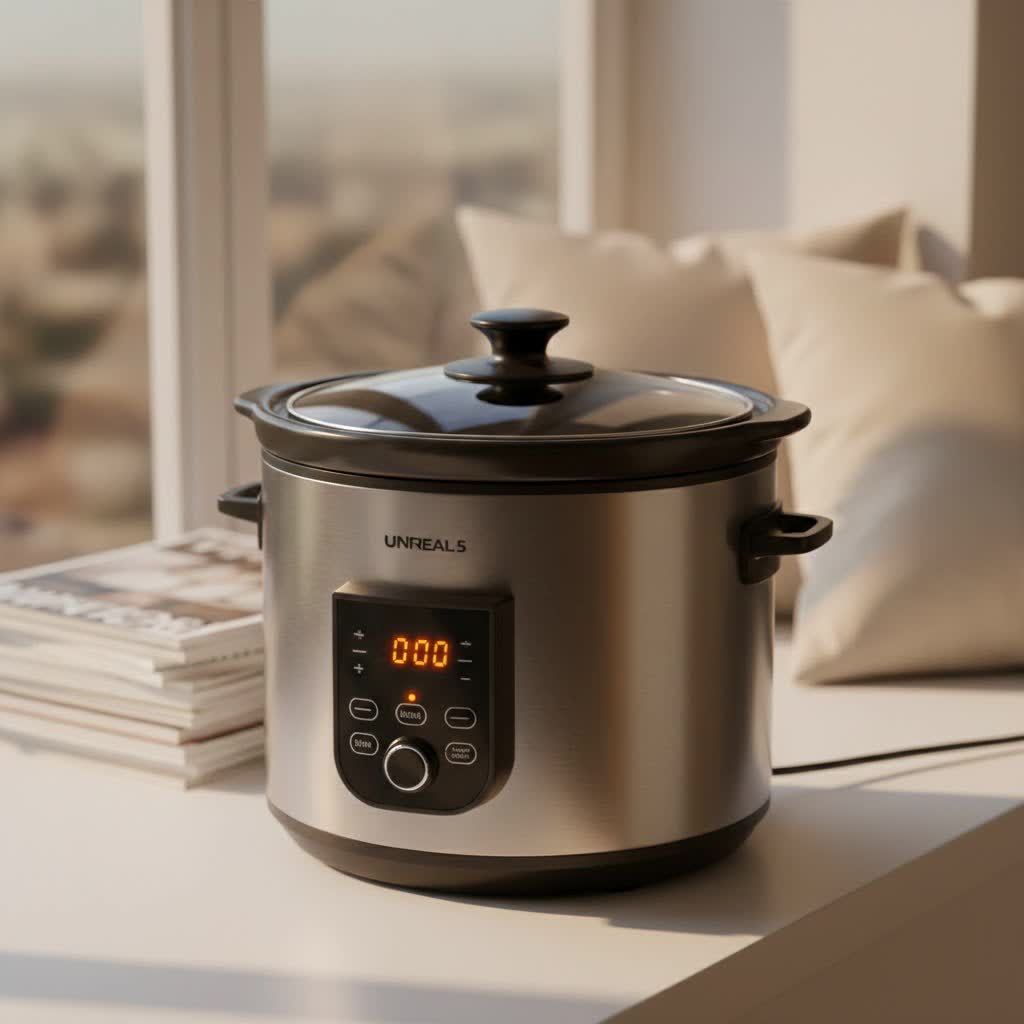
A slow cooker is an electric appliance designed to cook food at a low, consistent temperature, typically between 180°F and 210°F, over several hours. This method tenderizes tough meats and melds flavors, making it ideal for busy households seeking convenient, wholesome meals. The appliance consists of an outer housing with a heating element, a removable stoneware or ceramic inner pot, and a tight-fitting lid to trap moisture and heat.
What is a Slow Cooker?
A slow cooker, often known by the brand name Crock-Pot, is an electric cooking appliance designed to cook food at a low, consistent temperature over an extended period. Its genius lies in its ability to gently simmer ingredients, typically between 180°F to 210°F, for anywhere from a few hours to an entire workday. This method breaks down tough fibers in meats and melds flavors together beautifully, resulting in exceptionally tender dishes and rich, aromatic sauces that are difficult to achieve with faster cooking methods. For more slow cooker guides on this site.
The concept behind slow cooking isn’t new; its roots can be traced back to early 20th-century bean pots. However, it was truly revolutionized in the 1970s with the introduction of the Crock-Pot, marketing itself as the ultimate “set it and forget it” appliance for busy families.
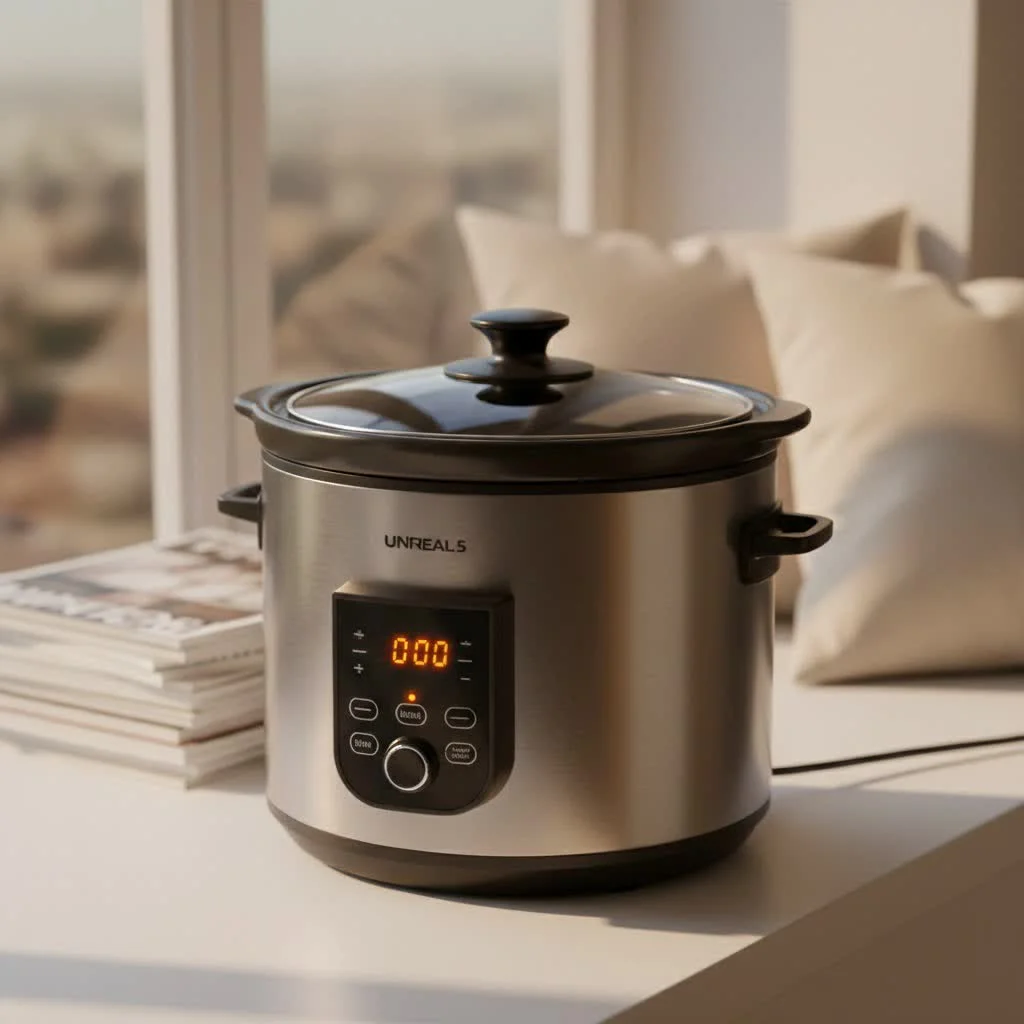
At its core, a slow cooker consists of a few main components: an outer housing that contains an electric heating element, a heavy, removable inner pot (usually made of stoneware or ceramic), and a tight-fitting lid. The heating element, typically located around the base and sides, provides uniform heat distribution, ensuring food cooks evenly without scorching, while the lid traps moisture and heat, creating a steamy environment that tenderizes ingredients.
Pros and Cons of Slow Cookers
Like any kitchen appliance, slow cookers come with their unique set of benefits and drawbacks. Understanding these can help you determine if a slow cooker is the right fit for your culinary needs.
Advantages
Slow cookers offer a compelling array of benefits that make them a staple in many kitchens. First and foremost is the time and effort saving aspect. You can simply combine ingredients in the morning, set the cooker, and return later to a fully prepared meal, freeing up your evenings for other activities. This “set it and forget it” convenience is unparalleled.
Another significant advantage is their ability to retain flavor and nutrition. The low, slow cooking process locks in moisture and nutrients, preventing the evaporation often associated with high-heat cooking. This method is particularly effective at tenderizing cheaper, tougher cuts of meat, transforming them into succulent dishes.
Slow cookers also boast versatile meal options. From hearty stews, soups, and chili to tender roasts, pulled pork, and even desserts like cobblers and cheesecakes, the possibilities are vast. Many models are also safe and easy to use, featuring simple controls and built-in safety mechanisms. They are generally energy-efficient, often using less electricity than an oven for extended cooking times.
Disadvantages
|
Our Picks for the Best Slow Cooker in 2026
As an Amazon Associate I earn from qualifying purchases.
|
||
| Num | Product | Action |
|---|---|---|
| 1 | Crock-Pot Large 8-Quart Programmable Slow Cooker with Auto Warm Setting Black Stainless Steel |

|
| 2 | Ninja MC1101 Foodi Everyday Possible Cooker Pro, 8-in-1 Versatility, One-Pot Faster Cooking Replaces 10 Tools, Family-Sized Capacity with Adjustable Temp Control, 6.5 quarts, Midnight Blue |
|
| 3 | 3.2L Natural Unglazed Earthenware Casserole,Yixing Zisha Clay Pot for Cooking, Healthy Slow Cooker for Soup, Stew, Rice -Zhuni,Red |
|
| 4 | Crock-Pot 7 Quart Oval Manual Slow Cooker, Stainless Steel (SCV700-S-BR), Versatile Cookware for Large Families or Entertaining |
|
| 5 | Crock-Pot 6 Quart Programmable Slow Cooker with Timer and Auto Food Warmer Setting, Stainless Steel |
|
| 6 | Ninja® 12-in-1 PossibleCooker™ PLUS - 8.5-qt - Sous Vide & Proof Multi-Cooker - Slow Cooker, Dutch Oven & More - Glass Lid & Integrated Spoon - Nonstick - Oven Safe Pot to 500°F - Black - MC1010 |
|
| 7 | 8-Quart Digital Programmable Slow Cooker with Timer - Small Kitchen Appliance for Family Dinners - Serves 10+ People - Heat Settings: Keep Warm, Low and High |
|
| 8 | Crock-Pot 6 Quart Cook & Carry Programmable Slow Cooker with Digital Timer Stainless Steel (CPSCVC60LL-S) pack of 1 |
|
| 9 | 3.2L Natural Unglazed Earthenware Casserole,Yixing Zisha Clay Pot for Cooking, Healthy Slow Cooker for Soup, Stew, Rice -Zini,Purple |
|
| 10 | Ninja MC1001 Foodi PossibleCooker PRO 8.5 Quart Multi-Cooker, with 8-in-1 Slow Cooker, Dutch Oven, Steamer, Glass Lid Integrated Spoon, Nonstick, Oven Safe Pot to 500°F, Sea Salt Gray |
|
Despite their many pros, slow cookers do have some limitations. The most obvious is the longer cooking times, which require advance planning and are not suitable for spontaneous meal preparation. While convenient for those who plan ahead, it means no quick dinners on a whim.
Another point to consider is limited temperature control accuracy. Most traditional slow cookers offer only “low,” “high,” and “warm” settings, which may not provide the precise temperature control desired for more delicate recipes. This can sometimes lead to a risk of overcooking or mushy texture for certain foods, especially if liquid ratios aren’t carefully managed.
Slow cookers can also be quite large, occupying significant counter or storage space. For those with small kitchens, this can be a real consideration. They generally offer less browning or reduction of sauces compared to stovetop cooking or pressure cooking, meaning that for a richer, more developed flavor, you might need to brown ingredients separately before adding them to the pot.
Types of Slow Cookers
The world of slow cookers has expanded beyond the basic Crock-Pot, now encompassing a variety of designs and functionalities to suit diverse preferences.
By Shape
Slow cookers typically come in three main shapes, each with its own advantages. Round slow cookers are the most traditional and are often ideal for smaller capacities, soups, and stews. Square slow cookers are less common but offer a different footprint. Oval slow cookers are highly popular, especially for larger families or those who enjoy cooking bigger cuts of meat like roasts, whole chickens, or ribs, as their shape accommodates these items more effectively.
By Material
The internal cooking pot, or insert, is usually made from one of two primary materials. Ceramic or stoneware inserts are favored for their excellent heat retention and even cooking. They are durable, often oven-safe, and can be beautiful enough to go straight from the cooker to the table. On the other hand, some modern slow cookers, particularly multi-cookers, feature metal inserts (often aluminum or stainless steel with a non-stick coating). These are generally lighter and can sometimes be used directly on the stovetop for browning ingredients before slow cooking, which adds depth of flavor and reduces the need for an extra pan.
By Features
Beyond shape and material, slow cookers vary significantly in their functionality. Manual slow cookers are the simplest, offering basic “low,” “high,” and “warm” settings. They are straightforward, reliable, and typically the most budget-friendly option.
Programmable slow cookers elevate convenience with digital timers that allow you to set specific cooking durations. Many can automatically switch to a “keep warm” setting once the cooking cycle is complete, ensuring your meal stays hot without overcooking.
Lastly, multi-cookers, such as popular electric pressure cookers like the Instant Pot, are highly versatile appliances that often include a slow cooker function alongside pressure cooking, sautéing, steaming, and even yogurt making. While they offer incredible flexibility, some users find their dedicated slow cooker function may not perform as consistently as a standalone slow cooker, as they often heat from the bottom only, compared to the wrap-around heating of traditional slow cookers.
Slow Cooker Comparison
When comparing different slow cookers, several factors come into play, including their material, capacity, features, and overall value.
Material-wise, ceramic or stoneware inserts are excellent for even, gentle heating, ideal for dishes where consistent temperature is key. They tend to be heavier and more fragile but retain heat well. Metal inserts, often non-stick, found in many multi-cookers, are lighter and can sometimes be hob-safe, allowing for browning meat before slow cooking in the same pot, which enhances flavor.
Capacity is a critical differentiator. Small slow cookers (under 3 liters/3 quarts) are perfect for individuals, couples, or preparing side dishes and dips. Medium-sized options (3-5 liters/4-6 quarts) cater well to average families (4-6 people) and most everyday recipes. Larger models (over 5 liters/6 quarts) are designed for big families, entertaining, or extensive meal prepping.
In terms of features, basic manual slow cookers offer simplicity and affordability with just “low,” “high,” and “warm” settings. Programmable models add timers, often with automatic keep-warm functions, providing greater convenience. Multi-cookers, while often more expensive, combine various cooking methods like pressure cooking, sautéing, and steaming with slow cooking, appealing to those seeking an all-in-one appliance. However, their slow cooking performance can sometimes be less robust than a dedicated slow cooker.
Price generally correlates with features and brand. Manual slow cookers are the most budget-friendly, while programmable and especially multi-functional models command higher prices. Reputable brands like Crock-Pot, Hamilton Beach, Cuisinart, and Instant Pot offer a range of options across these categories, typically providing good durability and customer support.
How to Choose the Best Slow Cooker (Buying Guide)
Choosing the perfect slow cooker involves a thoughtful assessment of your specific cooking habits and household needs. Consider these key factors to make an informed decision.
Determine Your Needs
Start by honestly assessing your family size. Are you cooking for one, a small family, or a larger group? This directly impacts the ideal capacity. Next, think about the types of meals you frequently prepare. Do you mostly make soups and stews, or do you envision cooking larger roasts and poultry? Your recipe repertoire will guide your choice of shape and features. Finally, establish a realistic budget. Slow cookers range widely in price, and knowing your spending limit will help narrow down options without compromising on essential features.
Selecting the Right Capacity
Capacity is crucial for optimal cooking results and convenience.
- Small (Under 3 Liters / 1.5-2.5 Quarts): Ideal for single servings, small side dishes, dips, or reheating leftovers.
- Medium (3-5 Liters / 3-6 Quarts): Perfect for small to medium-sized families (3-5 people) and most everyday recipes like chili, casseroles, and small roasts. This is the most versatile size for many households.
- Large (Over 5 Liters / 6+ Quarts): Best for large families, batch cooking, meal prepping for the week, or entertaining guests. These can accommodate large roasts, whole chickens, or significant quantities of stew.
Choosing the Insert Material
The material of the inner pot influences cooking performance and cleaning. Ceramic or stoneware inserts excel at even heat distribution and retention, resulting in consistently tender food. They are often oven-safe, making them versatile for finishing dishes or keeping food warm. However, they can be heavy and susceptible to breakage if dropped. Metal inserts (e.g., aluminum with non-stick coating), common in multi-cookers, are lighter and more durable. A significant advantage is that many metal inserts are stovetop-safe, allowing you to sear meats directly in the pot before slow cooking, which significantly builds flavor.
Essential Features
Modern slow cookers offer a range of features designed to enhance convenience and cooking precision.
- Cooking Modes: Ensure it has at least “Low,” “High,” and “Warm” settings.
- Timer and Delay Start: Programmable timers allow you to set precise cooking durations, while a delay start feature lets you postpone cooking to start at a later time.
- Automatic Keep Warm: This feature automatically switches the cooker to a warm setting once cooking is complete, preventing food from overcooking while keeping it hot until serving.
- Lid Lock: Essential for safe transport, especially if you plan to take your slow cooker to potlucks or gatherings.
- Temperature Probe: Some advanced models include a probe to monitor the internal temperature of meat, ensuring perfect doneness.
- Smart Features: Higher-end models may offer app control, allowing you to monitor and adjust cooking settings remotely.
Reputable Brands
Investing in a slow cooker from a trusted brand often ensures reliability, durability, and good customer support. Leading brands in the slow cooker market include Crock-Pot (the original and still highly popular), Hamilton Beach, Cuisinart, Instant Pot (known for its versatile multi-cookers with slow cook functions), GreenLife, and Ninja Foodi. Each brand offers a range of models with varying features and price points, so exploring their specific offerings will help you find a match.
Top Slow Cookers for 2024
Based on my extensive experience and ongoing market evaluation, several slow cooker models consistently stand out for their performance, features, and user satisfaction.
For overall reliability and programmability, the Hamilton Beach Portable 6 Quart Set & Forget Digital Programmable Slow Cooker is a top contender. Its built-in temperature probe allows for precise cooking, automatically shifting to a warm setting once food reaches the desired temperature. It’s perfect for those who want consistent results without constant monitoring.
If you’re looking for the best budget-friendly option without sacrificing quality, the GreenLife Cook Duo 6-Quart Nonstick Slow Cooker offers excellent value. With its ceramic insert made from sand, it provides impressive heat distribution and is free of PFAS, PFOA, lead, and cadmium for a healthier cooking experience. Its simple yet effective controls make it a great entry-level choice.
For ultimate versatility and multi-functional capabilities, consider options like the Cuisinart 3-In-1 Cook Central 6-Quart Multi-Cooker or the Instant Pot Pro 6-Quart Pressure Cooker. The Cuisinart allows you to slow cook, brown, and steam all in one unit, featuring a unique shape for better heat distribution. The Instant Pot Pro, while primarily a pressure cooker, offers a capable slow cook function along with many other modes, making it an all-in-one kitchen workhorse for those who desire speed and flexibility.
When large capacity is a priority, the Crock-Pot 8-Quart Programmable Slow Cooker is an excellent choice for big families or entertaining. It can handle substantial meals, ensuring there’s enough for everyone, often featuring programmable settings for added convenience.
For smaller households or specific uses like dips and small sides, compact slow cookers like the Elite Gourmet Electric Oval 2-Quart Slow Cooker or the IMUSA USA GAU-80113T 1.5 Quart Slow Cooker are highly recommended. These mini models are perfect for appetizers, sauces, or meals for one or two people, without taking up excessive counter space.
Using and Maintaining Your Slow Cooker
To get the most out of your slow cooker and ensure its longevity, proper usage and maintenance are key.
For safe and effective usage, always ensure your slow cooker is placed on a stable, heat-resistant surface. Avoid overfilling the pot; generally, fill it between half to two-thirds full to prevent boil-overs and ensure even cooking. Proper liquid levels are crucial; slow cooking retains moisture, so you often need less liquid than conventional recipes. Always keep the lid on during cooking, as lifting it releases heat and can add significant time to your cooking process. To follow food safety guidelines, ensure meats reach appropriate internal temperatures.
Cleaning and care for your slow cooker are straightforward. Most ceramic or stoneware inserts and glass lids are dishwasher-safe, making cleanup a breeze. For parts that aren’t dishwasher-safe or for stubborn food residue, handwashing with warm, soapy water is effective. Avoid using abrasive cleaners or scouring pads on non-stick surfaces to prevent damage. Always ensure the heating base is unplugged and completely cool before wiping it down with a damp cloth; never immerse the electrical base in water.
Should you encounter common issues, troubleshooting is often simple. If food is overcooked or mushy, you might be using too much liquid, the cooking time was too long, or the “high” setting was used unnecessarily. For undercooked food, ensure the lid was properly sealed, the cooker wasn’t overfilled, and the cooking time was adequate for the ingredients. Uneven heating might indicate an older model or an issue with the heating element, in which case consulting the manufacturer’s manual or customer support is advisable.
> “A slow cooker is more than just an appliance; it’s a lifestyle enhancer. It gives you back time, reduces stress, and delivers consistently comforting meals.” – Admin, Reviewerty.com, Slow Cooker Expert
Conclusion
The slow cooker stands as a testament to convenient cooking, transforming raw ingredients into tender, flavorful meals with minimal effort. Whether you’re a busy professional, a parent juggling multiple tasks, or simply someone who savors hearty, home-cooked food, a slow cooker can improve your kitchen routine. By understanding the different types, features, and capacities available, you can confidently choose a model that perfectly aligns with your culinary aspirations and lifestyle. Embrace the ease and deliciousness that a slow cooker brings, allowing you to return home to the inviting aroma of dinner, ready and waiting.
Which delicious slow cooker creation will you whip up first?
Frequently Asked Questions
Can you put frozen meat directly into a slow cooker?
While technically possible, it’s generally advised against putting frozen meat directly into a slow cooker. The appliance heats slowly, meaning frozen meat can spend too much time in the “danger zone” (between 40°F and 140°F) where harmful bacteria can multiply. It’s safer to thaw meat completely in the refrigerator before adding it to your slow cooker.
What’s the main difference between a slow cooker and an Instant Pot?
The primary difference lies in their cooking methods and speed. A slow cooker cooks food at low temperatures over many hours, while an Instant Pot (a type of multi-cooker) uses high pressure and steam to cook food much faster. While many Instant Pots have a slow cooker function, dedicated slow cookers often provide more consistent low-heat cooking.
Do slow cookers use a lot of electricity?
No, slow cookers are surprisingly energy-efficient. They operate at a low wattage, similar to a light bulb, and because they cook for extended periods at low temperatures, their overall energy consumption is often less than that of an electric oven, making them an economical choice for meal preparation.
Is it safe to leave a slow cooker on all day while I’m at work?
Yes, modern slow cookers are designed with safety in mind and are generally safe to leave unattended for the recommended cooking time, typically up to 8-10 hours. Always ensure it’s placed on a stable, heat-resistant surface, and refer to your appliance’s specific safety guidelines and instructions for optimal use.
What foods are best for slow cooking?
Slow cookers excel at preparing dishes that benefit from long, gentle simmering. This includes tough cuts of meat like chuck roast, pork shoulder, and stewing beef, as well as hearty soups, chili, stews, pulled pork, and even some casseroles and desserts. The moist, low-heat environment tenderizes ingredients beautifully and melds flavors.
Frequently Asked Questions
Can frozen meat be placed directly into a slow cooker?
It is generally not recommended to put frozen meat directly into a slow cooker. The slow heating process means the meat can remain in the bacterial 'danger zone' (40u00b0F to 140u00b0F) for too long. For food safety, always thaw meat completely in the refrigerator before adding it to the slow cooker.
What is the main difference between a slow cooker and an Instant Pot?
The primary difference lies in their cooking methods: a slow cooker uses low, consistent heat over many hours, while an Instant Pot (a multi-cooker) uses high pressure for much faster cooking. While many Instant Pots include a slow cook function, dedicated slow cookers often provide more consistent low-heat performance due to their wrap-around heating elements.
Are slow cookers energy-efficient compared to other appliances?
Yes, slow cookers are surprisingly energy-efficient. They operate at a low wattage, similar to a standard light bulb, and their extended low-temperature cooking often results in less overall energy consumption than an electric oven. This makes them an economical choice for preparing meals over several hours.
Is it safe to leave a slow cooker unattended while at work?
Modern slow cookers are designed for safety and are generally safe to leave unattended for typical cooking durations, usually up to 8-10 hours. Always ensure the appliance is placed on a stable, heat-resistant surface and consult your specific model's safety guidelines for optimal use and peace of mind.
Which types of food are most suitable for slow cooking?
Slow cookers excel at dishes that benefit from long, gentle simmering. This includes tough cuts of meat like chuck roast, pork shoulder, and stewing beef, which become exceptionally tender. Hearty soups, chili, stews, pulled pork, and even some casseroles and desserts also turn out beautifully in a slow cooker.
How to Choose the Best Slow Cooker
Selecting the ideal slow cooker involves considering your family size, cooking habits, and budget to ensure it meets your needs.
Assess your family size to determine the appropriate capacity, from small (under 3 liters) for individuals to large (over 5 liters) for big families. Consider the types of meals you frequently prepare, such as soups, stews, or large roasts, to guide your choice of shape and features. Establish a realistic budget to narrow down options without compromising essential functionalities.
Choose a capacity that matches your household: under 3 liters (1.5-2.5 quarts) for single servings, 3-5 liters (3-6 quarts) for small to medium families (3-5 people), and over 5 liters (6+ quarts) for large families or entertaining. The most versatile size for many households is typically 3-5 liters.
Opt for ceramic or stoneware inserts for excellent heat retention and even cooking, often oven-safe but heavier. Alternatively, consider metal inserts (common in multi-cookers) for lighter weight, durability, and the ability to sear meats directly on the stovetop before slow cooking, which enhances flavor.
Look for essential features like 'Low,' 'High,' and 'Warm' cooking modes, programmable timers, and automatic keep-warm functions for convenience. A lid lock is crucial for safe transport, while a temperature probe offers precise cooking for meats. Smart features with app control are available on higher-end models for remote monitoring.
Invest in a slow cooker from trusted brands such as Crock-Pot, Hamilton Beach, Cuisinart, Instant Pot, GreenLife, or Ninja Foodi. These brands typically offer reliability, durability, and good customer support across a range of models with varying features and price points.
Cooking gear we tested in our own kitchens
Free PDF — preheat times measured on 10 popular air fryers.

I got the Instant Pot Duo Nova, hoping to use it mostly for the slow cook function. While it does a decent job, I find the temperature control isn’t as precise as a dedicated slow cooker. My stews sometimes come out a little drier than I’d like, even on the low setting. It’s fine for occasional use, but I might get a separate one for serious slow cooking.
I’ve been using a slow cooker for years, and the point about tenderizing tough meats is so true. I recently made a beef pot roast that just fell apart, and the flavors were incredible. It’s perfect for those cheaper cuts of meat, making them taste gourmet without all the fuss. Definitely a kitchen essential for busy families.
I finally caved and bought one of the recommended Crock-Pot models, and it’s been a game-changer for weeknights. I used to dread cooking after work, but now I can prep in the morning and come home to a delicious, hot meal. The stoneware pot is super easy to clean too, which is a huge plus for me.
My old slow cooker finally gave out, and I replaced it with one of the models that has a programmable timer. What a difference! Being able to set it and forget it, knowing it will switch to ‘keep warm’ when done, is fantastic. No more overcooked meals if I’m running a little late. Highly recommend that feature.